
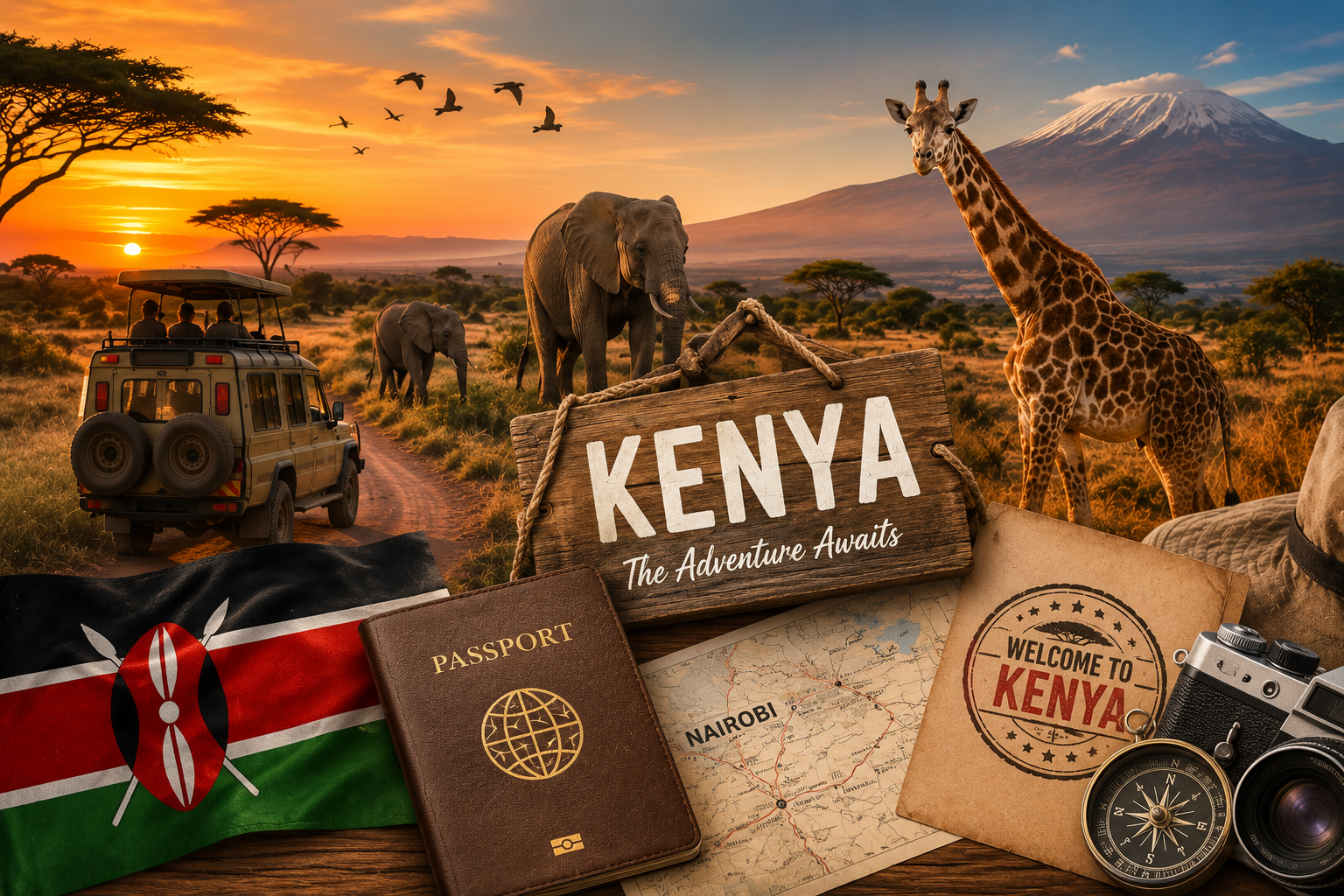
I remember the email that came through on a Sunday afternoon. A traveler from Texas had booked their dream Kenya safari. They had the flights, the lodges, the itinerary. Everything was perfect. Then they realized they had not checked the visa requirements. Panic set in.
Fortunately, they had enough time. They applied for their Kenya eVisa, received approval within a week, and had a smooth arrival. But that experience taught me something important. Understanding Kenya visa requirements is not just a box to tick. It is the first step toward a stress-free safari.
In this comprehensive guide, I will walk you through everything you need to know about Kenya entry requirements. I will cover the Kenya eVisa process, travel documents, passport rules, and practical tips for a smooth arrival. Whether you are visiting for the Great Migration, a beach holiday, or a multi-country East Africa adventure, this guide has you covered.
Let me help you navigate the process so you can focus on the incredible experiences waiting for you in Kenya.
Kenya Entry Requirements Explained
Understanding Kenya entry requirements is essential for a smooth travel experience. Let me break down what you need to know.
Passport Requirements
Your passport is the most important Kenya travel document. Here are the key requirements.
Validity is critical. Your passport must be valid for at least six months from your arrival date in Kenya. This is a non-negotiable requirement. Immigration officers check this carefully.
Blank pages are also essential. You need at least two consecutive blank pages for entry and exit stamps. If your passport is running low on pages, renew it before travel.
The condition of your passport matters too. It should be in good condition with no damage, tears, or water stains. Damaged passports can be rejected at immigration.
For children traveling with parents, each child needs their own passport. Children cannot travel on a parent’s passport. This is a common mistake that causes problems at the airport.
Travel Documentation
Beyond your passport, you need several other Kenya travel documents.
Your visa is the most important. This can be a printed eVisa approval or a visa on arrival receipt. Always carry a physical copy with your passport.
Return flight evidence is often requested. Immigration officers may ask for proof of onward travel. Have your flight itinerary printed or accessible on your phone.
Accommodation confirmation is also useful. A booking confirmation from your hotel or safari lodge shows where you will be staying. This helps demonstrate your travel plans.
Travel insurance is strongly recommended. While not always checked, many safari operators require it. Ensure your policy covers medical evacuation, which can be expensive without insurance.
Yellow fever vaccination is required if you are traveling from a country with yellow fever risk. This includes transiting through such a country. The certificate must be presented at immigration. For travelers coming directly from Europe, North America, or Australia, yellow fever is not required but is recommended by some health authorities.
Arrival Preparation
Preparing for arrival makes the process smoother.
Complete the online arrival form before travel. Kenya has an online arrival declaration system. Fill it out before departure to save time at the airport.
Have all documents in an easily accessible folder. Keep your passport, eVisa, flight itinerary, and accommodation confirmation together. This avoids fumbling through bags at immigration.
Keep cash for visa fees if you plan to use visa on arrival. US dollars are preferred, and bills should be from the post-2020 series. Cards are not accepted for visa fees.
Allow enough time between your international arrival and domestic connections. If you are flying to the Masai Mara or other safari destinations, leave at least three to four hours. This accounts for immigration, baggage claim, and potential delays.
Kenya eVisa Guide
The Kenya eVisa is the most convenient way to obtain your visa before travel. Let me explain how it works.
What Is Kenya eVisa
The Kenya eVisa is an electronic travel authorization that allows you to enter Kenya. It is issued online and linked to your passport number. You apply through the official Kenya immigration website. The eVisa is valid for a single entry and typically allows a stay of up to 90 days.
The eVisa is mandatory for most nationalities. It is faster and more reliable than visa on arrival. Applying in advance reduces stress and saves time at the airport. The eVisa also helps you avoid long queues at immigration.
Some travelers ask whether Kenya eVisa is mandatory. For most nationalities, yes. While visa on arrival is available, the eVisa is strongly preferred. It simplifies the arrival process and gives you peace of mind.
How to Apply for Kenya Visa
Applying for a Kenya visa is straightforward. Here is the step by step process.
First, visit the official Kenya immigration website. This is the only official source for Kenya visa applications. Avoid third-party websites that charge extra fees. They often provide the same service but at higher costs.
Second, complete the online application form. You need to provide personal details, passport information, travel dates, and contact information. Be careful with your passport number and name spelling. Any errors can cause delays or rejection.
Third, upload required documents. You need a scanned copy of your passport bio-data page and a passport-sized photo. The photo should meet the size and background requirements. Use a recent photo that looks like you.
Fourth, pay the visa fee. The standard tourist visa costs 51 US dollars for most nationalities. Payment is made online using a credit or debit card. The fee is non-refundable, so double-check your application before payment.
Fifth, receive your eVisa approval. Processing typically takes two to seven working days. You will receive an email with your eVisa attached. Print this document and carry it with your passport.
Sixth, travel with your eVisa. Show your printed eVisa and passport at the immigration desk. The officer will stamp your passport and grant entry.
Processing Expectations
Kenya eVisa processing times vary by season and application volume.
Standard processing takes two to seven working days. However, during peak travel seasons, processing may take longer. Apply at least two to three weeks before your departure to allow for delays.
Expedited processing is not typically available for Kenya visas. Plan ahead to avoid last-minute stress. If you are traveling during the Great Migration season or school holidays, apply even earlier.
Common application errors cause delays. Typos in your name or passport number are frequent issues. Incorrect photo sizes or formats also cause problems. Review your application carefully before submitting.
If you need help, contact the Kenya immigration office directly. They can answer questions about the application process. Avoid relying on unofficial sources for visa advice.
Common Application Mistakes
Understanding common Kenya visa application errors helps you avoid them.
Incorrect passport details are the most frequent mistake. Double-check your passport number, name spelling, and expiration date. Even one wrong digit can delay your application.
Wrong photo format is another common issue. The photo must meet specific size and background requirements. Use a recent, clear photo that looks like you. Avoid selfies or photos with busy backgrounds.
Applying too late causes unnecessary stress. The Kenya eVisa can take up to seven working days. Rushing the application increases the risk of errors. Apply early and give yourself a buffer.
Using unofficial websites leads to extra fees. Only use the official Kenya immigration website. Third-party sites often charge more and provide no additional value.
Documents Required Before Travel
Let me summarize the documents you need before traveling to Kenya.
Your passport must be valid for at least six months from arrival. It must have at least two blank pages. A printed copy of your Kenya eVisa approval is essential. You also need proof of return or onward travel, such as a flight itinerary.
Accommodation confirmation is helpful to show where you are staying. Travel insurance documentation is recommended. A yellow fever certificate is required if traveling from an endemic zone.
Carry physical copies of all documents. Digital copies on your phone are useful but not always reliable. Keep originals and copies in separate places.
For Kenya travel planning, create a checklist. Gather all documents at least a week before departure. This reduces stress and ensures nothing is forgotten.
Kenya Safari Entry Requirements
If you are coming for a Kenya safari, your entry process is similar to any tourist. However, there are a few specific considerations.
Domestic flight planning is important. If you are flying to the Masai Mara or other safari destinations, allow enough time between your international arrival and domestic flight. International flights can be delayed, so leaving three to four hours is wise.
Your safari itinerary is useful to carry. Immigration officers may ask for details about your travel plans. Having a printed itinerary with lodge names and dates is helpful.
Park fees are typically included in your safari package. However, have proof of payment handy. Some immigration officers may ask about your safari arrangements.
Cash is useful for visa fees and incidentals. US dollars are widely accepted. Carry small denominations for tips and purchases.
Your safari operator can also provide guidance. Many operators, including Probe Safaris, offer pre-arrival checklists and support. They can confirm that you have all required documents before departure.
Family Travel Requirements
Traveling with children requires additional preparation. Let me cover Kenya family travel requirements.
Each child must have their own passport. Children cannot travel on a parent’s passport. This is a common mistake that causes problems at the airport.
Birth certificates are sometimes requested. Carry a copy of each child’s birth certificate. This helps demonstrate parentage, especially if only one parent is traveling.
If only one parent is traveling, consider carrying a consent letter. This is a letter from the other parent authorizing travel. It is not always required but is useful in case of questions.
Family travel can be stressful. Pack extra snacks and activities for children. Plan for potential delays at immigration and baggage claim. Allow extra time for everything.
Common Travel Mistakes to Avoid
Let me help you avoid common Kenya travel mistakes.
Forgetting to check passport validity is a frequent error. Your passport must be valid for at least six months from arrival. If it expires sooner, renew it before travel.
Not having enough blank pages causes problems. You need at least two blank pages for entry and exit stamps. If your passport is full, renew it or get extra pages added.
Applying for a visa too late creates stress. The Kenya eVisa can take up to seven working days. Apply at least two to three weeks before departure.
Printing documents is essential. Do not rely only on digital copies. Print your eVisa, flight itinerary, and accommodation confirmation. Keep them with your passport.
Forgetting about the yellow fever certificate causes issues. If you are traveling from a yellow fever risk country, you need the certificate. Check your transit route too. Even transiting through a risk country requires the certificate.
Not carrying enough cash is problematic. Visa fees are paid in cash. ATMs are available in Nairobi but not always in rural areas. Carry US dollars for incidentals.
Frequently Asked Questions
Do you need a visa for Kenya?
Most travelers need a visa for Kenya. You can apply online for a Kenya eVisa before travel or get a visa on arrival at major airports. The tourist visa costs 51 US dollars for most nationalities. Ensure your passport is valid for at least six months from your arrival date.
Can you apply online for a Kenya visa?
Yes, you can apply online through the official Kenya immigration website. This is the most convenient and recommended option. It saves time at the airport and reduces stress.
How long does Kenya visa processing take?
Kenya eVisa processing typically takes two to seven working days. Apply at least two to three weeks before departure to allow for delays. Processing times can be longer during peak travel seasons.
What documents are required for a Kenya visa?
You need a valid passport (six months validity, two blank pages), a passport-sized photo, and payment for the visa fee. Additional documents like flight itineraries and accommodation confirmations are useful but not required for the application.
Can tourists enter Kenya easily?
Yes, tourists can enter Kenya easily with proper documentation. The Kenya eVisa process is straightforward. Most travelers have a smooth arrival experience when they prepare in advance.
Is Kenya eVisa mandatory?
For most nationalities, yes. While visa on arrival is available, the eVisa is strongly preferred. It simplifies the arrival process and saves time at immigration.
How long can visitors stay in Kenya?
The standard tourist visa allows a stay of up to 90 days. Extensions are possible but must be applied for at immigration offices. Overstaying can result in fines.
Do children require travel documents for Kenya?
Yes, each child must have their own passport. Children cannot travel on a parent’s passport. A birth certificate and consent letter may be requested in some cases.
What happens on arrival in Kenya?
On arrival, you proceed to immigration, present your passport and visa, and receive an entry stamp. Then you collect your baggage and clear customs. The process typically takes thirty minutes to an hour.
How early should I prepare for Kenya travel?
Start preparing at least two to three months before departure. Check passport validity, apply for your visa, arrange travel insurance, and confirm health requirements. This ensures a stress-free experience.
Do I need a yellow fever vaccine for Kenya?
Yellow fever vaccination is required if you are traveling from a country with yellow fever risk. This includes transiting through such a country. The certificate must be presented at immigration. Travelers from Europe, North America, and Australia do not need it but should consult their doctor.
Is travel insurance required for Kenya?
Travel insurance is not mandatory by law but is strongly recommended. Many safari operators require it, especially for medical evacuation coverage. Ensure your policy covers safari activities.
Can I transit through Kenya without a visa?
Transit travelers may not need a visa if they remain in the airport transit area. However, if you leave the airport or stay longer than 24 hours, you will need a visa. Check with your airline for specific transit rules.
Your Kenya Travel Planning Starts Here
You now have a complete understanding of Kenya visa requirements and entry rules for 2026. You know how to apply for a Kenya eVisa, what documents you need, and how to prepare for a smooth arrival.
So what is next?
Do not let visa confusion delay your safari dreams. The process is straightforward when you plan ahead. Apply for your eVisa early, gather your documents, and focus on the incredible experiences waiting for you.
At Probe Safaris, we help travelers with every aspect of Kenya travel planning. We provide guidance on visa requirements, entry rules, and safari preparation. Our local expertise ensures you have a smooth experience from arrival to departure.
Ready to Plan Your Kenya Safari?
Your visa is sorted, the documents are ready, and the adventure is calling. Let us turn your dream safari into reality.
Continue Planning Your East Africa Safari
|
🌍
Tanzania Visa RequirementsPrepare your travel documents and understand entry requirements. Read Guide → |
☀️
Best Time to Visit Kenya & TanzaniaChoose the ideal safari season and migration period. Explore → |
|



An Engaging Blog Post