Plan the perfect Kenya safari with expert tips on the Masai Mara, Amboseli, wildlife, costs, best travel times, and unforgettable safari experiences. But, first things first.
If you are reading this, you are probably sitting on your couch in New York, London, Sydney, or Seoul – dreaming of lions, wide-open savannahs, and that perfect sunset photo.
I get it. But here is the problem. There is a lot of bad information out there. Outdated prices. Fake itineraries. And websites that look like they were built in 2005.
Probe Safaris is different. We are a local operator. We drive these roads. We know which lodge has the best view and which river crossing actually has wildebeest.
So, grab a coffee. Let me walk you through everything you need to know about a Kenya safari.
By the end of this guide, you will know exactly where to go, when to book, how much to budget, and why Kenya blows other safari destinations out of the water.
Ready? Let us dive in.
Why Consider a Kenya Safari?
Here is the truth. Kenya is the birthplace of the modern safari. The word “safari” itself comes from the Swahili language. It simply means “journey.”
But in Kenya, a safari is not just a tour. It is an experience.
Here is why travelers from the USA, Canada, Europe, Australia, and other destinations keep coming back:
- The Big Five are actually realistic. Lions, leopards, elephants, rhinos, and buffalo. You can see all five in a long weekend if you plan it right.
- The Great Migration. Yeah, you have seen it on Netflix. Seeing 2 million wildebeest cross the Mara River in real life? That changes you.
- The weather. Unlike humid jungles, Kenya has pleasant temperatures year-round. You are not sweating through your shirt at 8 AM.
- The people. Kenyans are warm, welcoming, and speak excellent English. No language barriers here.
But wait. There is a catch.
Kenya is not a “show up and figure it out” destination. You need a plan. That is why I wrote this guide.
The Best Places to Visit on a Kenya Safari (And Where to Skip)
You have about 50 national parks to choose from. But you do not have 6 months.
So, let me narrow it down. These are the destinations you actually care about.
Masai Mara National Reserve (The King)
No Kenya safari guide is complete without the Masai Mara.
This is the big one. The superstar.
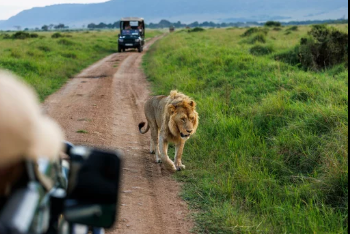
- What you will see: Lions sleeping in trees, cheetahs hunting on open plains, and (if you time it right) the Great Migration river crossings.
- Best for: First-timers, photographers, luxury travelers.
- The catch: It is popular. You will share the riverbanks with other vehicles during peak season (July-October).
My advice is to spend at least 3 nights here. One night is a tease. Two nights is okay. Three nights gives you a real shot at seeing a kill or a crossing.
Amboseli National Park (The Postcard)
Now listen to this.
If you have ever seen a photo of an elephant walking in front of a snowy mountain – that is Amboseli.
- What you will see: Huge herds of elephants. Seriously, hundreds of them. And Mount Kilimanjaro looming in the background.
- Best for: Photographers, honeymooners, elephant lovers.
- The catch: The roads can be dusty. Bring a face mask or bandana.
Go early in the morning. The clouds usually cover Kilimanjaro by 10 AM. You want that sunrise shot.
Lake Nakuru National Park (The Rhino Fortress)
Here is a secret most tourists do not know.
The Masai Mara is great for lions. But rhinos? You go to Lake Nakuru.
- What you will see: Both white and black rhinos. Also, flamingos (if the water levels are right) and Rothschild’s giraffes.
- Best for: Families, birdwatchers, and anyone who wants to complete the Big Five checklist.
- The catch: It is a smaller park. You can cover most of it in half a day.
Samburu National Reserve (The Weird and Wonderful)
Looking for something different?
Samburu is up north. It is drier, hotter, and wilder. And it has animals you will not see anywhere else in Kenya.
- What you will see: The “Samburu Special Five” – Grevy’s zebra, reticulated giraffe, Somali ostrich, Beisa oryx, and the weird-looking gerenuk (a giraffe-gazelle hybrid).
- Best for: Return visitors, adventurers, and people who hate crowds.
- The catch: It is a long drive from Nairobi (6+ hours). Fly if you can afford it.
Tsavo East and Tsavo West (The Wild West)
Tsavo is massive. I mean, it is one of the largest national parks in the world.
- What you will see: “Red” elephants (they roll in the red dust), lava flows, and Mzima Springs (where you can watch hippos underwater).
- Best for: Budget travelers and people combining a safari with a beach holiday in Mombasa.
- The catch: The animals are more spread out. You need patience.
When is the Best Time for a Kenya Safari? (Month-by-Month)
This is one of the most common questions I get.
“Is there a best month?”
Yes. But it depends on what you want.
Dry Season (June to October) – The Most Popular
This is peak season for a reason.
- Weather: Sunny, cool mornings, no rain.
- Wildlife: Animals gather around water sources. They are easy to spot.
- The Migration: The Mara River crossings happen between July and October.
The downside? Prices are high. Lodges book up 6-12 months in advance. And you will have company on the game drives.
Who is this for? First-time visitors, families on school holidays, and anyone chasing the Great Migration.
Green Season (November to May) – The Hidden Gem
Now listen to me closely.
Most tourists avoid the “rainy season.” But that is a mistake.
- Weather: Short afternoon showers (usually 1-2 hours). Mornings are often sunny.
- Wildlife: Calving season (January-March). Thousands of baby wildebeest and zebras. Predators go crazy.
- Crowds: Almost none. You will have the parks to yourself.
- Cost: Safari prices drop by 30-50%.
The downside? Some roads get muddy. You definitely need a 4×4 vehicle.
Who is this for? Budget travelers, photographers (the light is gorgeous), and couples avoiding crowds.
The Great Migration Season (July-October)
Let me clarify something.
The wildebeest are always migrating. They do a loop between Tanzania and Kenya.
But the famous river crossings – where crocodiles attack and wildebeest leap into the water – happen in Kenya’s Masai Mara between July and October.
If you want to see a crossing: Book August or September. October is good, but the herds start moving back to Tanzania by late October.
Ready to Start Planning?
You have the destination list. You know the best times to visit.
But here is where most travelers get stuck – the actual planning. Park fees, vehicle selection, accommodation bookings, driver assignments. It is a lot to juggle, especially from another continent.
That is exactly what I handle for you.
At Probe Safaris, I build custom Kenya safari itineraries based on your travel dates, group size, and budget. No copy-paste tours. Just honest advice from a local team that knows these parks like the back of our hands.
What Wildlife Will You Actually See? (Be Honest)
I hate websites that promise “hundreds of lions” and you see one from 500 meters away.
Let me be real with you.
Here is what a typical Kenya wildlife safari looks like:
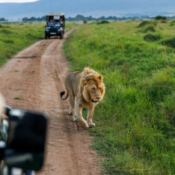
- Lions: Very common in Masai Mara and Amboseli. You will see them. Probably napping under a tree.
- Leopards: Tricky. They are shy. But the Masai Mara and Lake Nakuru have good populations. A good guide (like ours) knows where they hide.
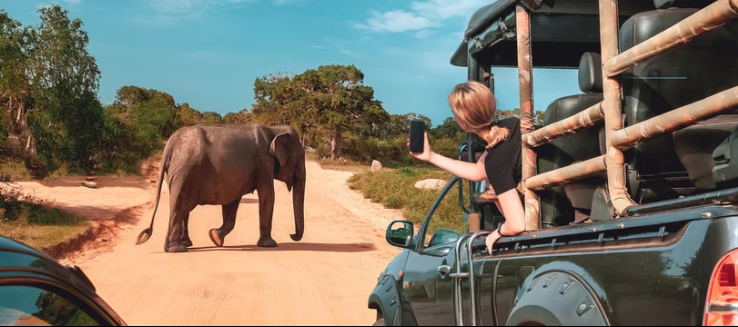
- Elephants: Guaranteed in Amboseli. Literally hundreds of them.
- Rhinos: Go to Lake Nakuru or Ol Pejeta. You will see both black and white rhinos.
- Buffaloes: Everywhere. Do not get too close. They are grumpy and dangerous.
Beyond the Big Five:
- Cheetahs: Common in Masai Mara. They hunt during the day, so you have a good chance.
- Hippos: Any river or lake. Keep your distance.
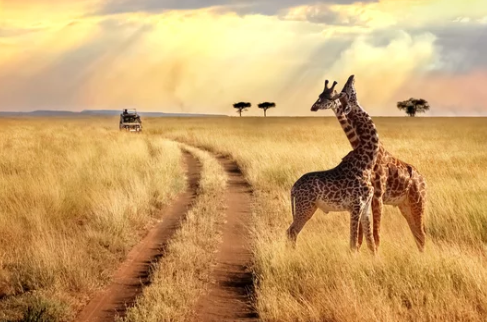
- Giraffes: Everywhere. Masai giraffes are the most common.
- Birdlife: Over 1,100 species. Even non-birders love the lilac-breasted roller (it looks like a rainbow).
- Bottom line:
If you book at least 5-7 days and visit 3 different parks, you will see the Big Five. I am that confident.
How Much Does a Kenya Safari Cost? (2026 Prices)
Let us talk money.
Safari costs vary wildly. I have seen $200 budget camping trips and $2,000-per-night luxury lodges.
Here is a realistic breakdown for 2026.
Budget Safaris ($150 – $250 per person/night)
- Accommodation: Basic camping or very simple guesthouses.
- Transport: Safari vans (not 4×4). They are fine on main roads but struggle in mud.
- Meals: Simple. Think rice, beans, and vegetables.
- Who is this for? Backpackers and solo travelers on a tight budget.
Mid-Range Safaris ($300 – $600 per person/night)
This is the sweet spot for most of our clients from the USA and Europe.
- Accommodation: Comfortable tented camps with private bathrooms, hot showers, and sometimes a pool.
- Transport: 4×4 Land Cruisers with pop-up roofs. This is non-negotiable for a good experience.
- Meals: Buffet breakfasts, packed lunches, and three-course dinners.
- Who is this for? Couples, small families, and first-time travelers.
Luxury Safaris ($800 – $1,500+ per person/night)
- Accommodation: High-end lodges and exclusive camps. Think private decks, outdoor showers, and gourmet dining.
- Transport: Fly-in safaris or private 4×4 vehicles with champagne and wifi.
- Extras: Spa treatments, bush dinners under the stars, and hot air balloon rides.
- Who is this for? Honeymoons, milestone birthdays, and luxury travelers.
A quick reality check:
A 7-day Kenya safari vacation visiting Amboseli, Lake Nakuru, and Masai Mara in mid-range accommodation will cost roughly $2,500 to $3,500 per person (excluding international flights).
That includes park fees, transport, a private guide, accommodation, and most meals.
Compare that to a week in Paris or New York. Suddenly, a safari looks like a bargain.
How Many Days Do You Need for a Kenya Safari? (Be Realistic)
You have 3 days? 5 days? 10 days?
Let me tell you exactly what you can accomplish.
3-Day Safari (The Teaser)
Honestly? Too short.
You will see one park (probably Amboseli or Masai Mara). You will rush. You will likely miss the leopard and the rhino.
Only book 3 days if:
- You are on a business trip and have a weekend free.
- You are combining with a beach holiday in Zanzibar or Mombasa.
5-Day Kenya Safari (The Classic)
Now we are talking.
- Sample itinerary: Masai Mara (3 nights) + Lake Nakuru (1 night).
- What you will see: Lions, elephants, buffalo, rhinos (at Nakuru), and maybe a leopard.
- Who is this for: Families on a tight schedule or travelers who want a taste of Kenya.
7-Day Kenya Safari (The Sweet Spot)
This is the best Kenya safari itinerary for 90% of travelers.
- Sample itinerary: Amboseli (2 nights) → Lake Nakuru (1 night) → Masai Mara (3 nights).
- What you will see: The Big Five, Mount Kilimanjaro, flamingos, and possibly a river crossing.
- Why 7 days? It gives you a buffer. If it rains one day, you have backup days. You are not stressed.
10+ Day Safari (The Explorer)
- Add Samburu for unique northern species.
- Add Lake Naivasha for boat rides and walking safaris.
- Add Tsavo for a true wilderness experience.
My advice for first-timers: Do not book 10+ days unless you are a hardcore wildlife enthusiast. 7 days is plenty.
What to Pack for a Kenya Safari (Ditch the Khaki)
Let me save you from overpacking.
You do not need a full safari wardrobe. You are not going on a photoshoot for National Geographic.
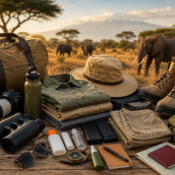
Here is your packing list, plain and simple:
Clothing
- Neutral colors only. Olive, tan, brown. No bright red or blue (animals see them).
- Long sleeves and pants. For morning cold and evening mosquitoes.
- A fleece or light jacket. Game drives start at 6 AM. It is freezing in an open vehicle.
- Shorts and t-shirts. For midday when the sun is high.
- Swimsuit. Most lodges have pools.
Gear
- Binoculars. More important than your camera. I am serious.
- Camera with a zoom lens. 300mm minimum. 400mm is better.
- Power bank. Safari vehicles have charging ports, but bring a backup.
- Headlamp or flashlight. Camps can be dark at night.
Health and Documents
- Passport (valid for 6+ months).
- eVisa printout. Apply online 2 weeks before travel.
- Yellow Fever vaccine certificate. Mandatory if coming from South America or another African country.
- Malaria prophylaxis. Talk to your doctor.
- Sunscreen and lip balm. The African sun is no joke.
What to leave at home:
- Jeans (too stiff and hot).
- High heels (obvious, but you would be surprised).
- Drones (illegal in national parks).
Kenya Visa and Entry Requirements (Do Not Skip This)
I have seen too many travelers get stuck at the airport.
Do not be that person.
The eVisa Process
- Apply online at the official Kenyan eVisa website.
- Cost: $51 USD for most nationalities.
- Processing time: 2-7 days. Do not wait until the last minute.
- Print it. You need a physical copy to show at immigration.
Other Requirements
- Passport validity: At least 6 months from your arrival date.
- Blank pages: At least 2 blank pages for entry stamps.
- Yellow Fever vaccine: Required if you are traveling from a country with Yellow Fever risk (including transiting through Ethiopia or Kenya Airways routes from West Africa).
- COVID-19: No longer required for most travelers.
Remember to carry $50-100 in USD (post-2020 series bills) for tips and incidentals. ATMs are available in Nairobi, but not in the parks.
Kenya Safari Travel Tips (From a Local)
Let me give you the inside scoop.
Currency and Tipping
- The local currency is the Kenyan Shilling (KES) . But USD is widely accepted in tourist areas.
- Tipping: Safari guides typically get $10-20 USD per day per group. Wait staff at lodges: $5-10 per day.
Safety
- Is Kenya safe for tourists? Yes. The safari circuit is heavily guarded and patrolled.
- In Nairobi: Do not walk around at night. Use Uber or hotel taxis.
- In the parks: Never get out of the vehicle unless your guide says it is safe.
Photography Tips
- Shoot in Shutter Priority mode (TV or S). 1/1000th of a second for moving animals.
- Golden hour (sunrise and sunset) is your best friend.
- Do not bring a tripod. It is useless in a moving vehicle.
Connectivity
- Wi-Fi is available in most lodges, but it is slow.
- Buy a Safaricom SIM card at the airport. 10GB of data costs about $10 USD.
Frequently Asked Questions
Is Kenya safe for tourists right now?
Yes. The tourism areas (Masai Mara, Amboseli, Nakuru) are very safe. Use common sense in big cities, just like you would in New York or London.
How much does a safari in Kenya cost?
For a 7-day mid-range safari, budget $2,500-$3,500 per person (excluding flights from the USA or Europe).
What is the best month for a Kenya safari?
September. The weather is dry, the Migration is in full swing, and there are fewer crowds than July/August.
How many days are enough for a Kenya safari?
7 days. That gives you time for 3 parks without rushing.
Is Masai Mara worth visiting?
Absolutely. The density of predators is higher than almost anywhere else in Africa. Even without the Migration, it is world-class.
Can I see the Big Five in Kenya?
Yes. You need at least 5 days and visits to Masai Mara (lions, leopards, elephants, buffalo) and Lake Nakuru (rhinos).
Do I need a visa for Kenya?
Yes. Most nationalities need an eVisa. Apply online 2 weeks before travel.
What vaccinations do I need for Kenya?
Yellow Fever is required if coming from an endemic zone. Hepatitis A, Typhoid, and Tetanus are recommended. Malaria prophylaxis is strongly advised.
Your Kenya Safari Awaits
You made it to the end. That tells me you are serious about this trip.
By now, you know:
- The best Kenya safari destinations (Masai Mara, Amboseli, Nakuru, Samburu).
- When to go (dry season for crowds, green season for value).
- How much to budget ($2,500-$3,500 for a week).
- What to pack (binoculars over camera gear).
This guide was written by the team at Probe Safaris, a locally-owned safari operator based in Nairobi, Kenya. We drive these roads every week. We update this guide regularly to keep prices, visa rules, and travel tips accurate for 2026.