When is the best time to visit Kenya & Tanzania for Safari?
I get asked about timing more than anything else. People have seen the photos of river crossings and calving plains. They have dreamed about golden light on the savannah. But they have no idea when to actually book their trip.
Let me solve that problem for you right now.
The best time to visit Kenya and Tanzania for safari is not a single month. It depends on what you want to see. Do you want the Great Migration river crossings? Do you want calving season with baby animals? Do you want lower prices and fewer crowds? Do you want dramatic photography conditions?
In this complete guide, I will walk you through every season, every month, and every factor that matters. I will cover Kenya safari weather and Tanzania safari weather in detail. I will explain the dry season vs green season safari differences. I will show you when to visit Serengeti and Masai Mara for the best experiences. And I will help you plan your East Africa safari seasons with confidence.
By the end, you will know exactly when to book your Kenya and Tanzania safari.
When is the Best Time to Visit Kenya & Tanzania
Let me give you the short answer first.
June to October is the peak safari season across both countries. This is the dry season. Wildlife viewing is at its best. The Great Migration reaches its dramatic peak with river crossings. The weather is sunny and comfortable. Prices are highest and crowds are largest.
January to March offers excellent wildlife viewing with fewer crowds. This is calving season in the southern Serengeti. Predator action is intense. Photography conditions are outstanding. Prices are moderate.
April to May is the long rainy season. Roads can be muddy. Some camps close. But this is also the cheapest time to visit Kenya and Tanzania. The landscape is lush and green. Birdwatching is exceptional.
November to December brings short rains. The landscape is green. Crowds are thin. Prices are lower than peak season. This is a hidden gem for budget travelers.
For most travelers, the best time for safari in Kenya and Tanzania is either June to October for the classic experience or January to March for calving season. The choice depends on your priorities.
Kenya and Tanzania Safari Seasons Explained
The East Africa safari seasons follow a predictable pattern. Understanding these Kenya and Tanzania safari seasons helps you plan effectively.
Dry Season
The dry season runs from June to October. This is the best time for safari in Kenya and Tanzania for most travelers.
The Kenya safari weather during dry season is sunny with little to no rain. Daytime temperatures are pleasant, ranging from 20 to 28 degrees Celsius. Nights can be cool, especially in July and August when temperatures drop to 10 degrees.
The Tanzania safari weather follows the same pattern. The Serengeti and Ngorongoro experience clear skies and warm days. The grass is short, making wildlife easier to spot. Animals gather around water sources, creating concentrated viewing opportunities.
This is when the Great Migration reaches its northern extremes. The herds cross the Mara River in Kenya’s Masai Mara and Tanzania’s northern Serengeti. River crossings are the most dramatic wildlife event on earth.
The downsides are real. Safari prices are at their highest. Lodges book months in advance. The parks can feel crowded, especially around popular crossing points. You need to plan early and book early.
Who should visit during dry season: First time visitors. Travelers who want the classic safari experience. Anyone whose schedule is fixed to summer months. Those who prioritize seeing the migration above all else.
Green Season
The green season runs from November to May, with two distinct periods.
The short rains fall from November to December. The long rains fall from March to May. January to February is actually quite dry, making it a bridge between seasons.
The Kenya safari weather during green season is more variable. Afternoon showers are common, usually lasting one to two hours. Mornings are often sunny. The landscape transforms into lush greenery.
The Tanzania safari weather follows the same pattern. The Serengeti becomes a carpet of green. The skies are dramatic, with towering clouds and stunning sunsets.
The benefits are significant. Safari prices drop by thirty to fifty percent. Crowds disappear. You can have entire game drives without seeing another vehicle. Migratory birds arrive, making this the best time for birdwatching. The scenery is breathtaking.
The downsides are manageable. Some roads become muddy, especially during the long rains. A 4×4 vehicle is essential. Some camps close for maintenance in April and May. The wildlife is more dispersed, so sightings require more patience.
Who should visit during green season: Budget conscious travelers. Photographers who want dramatic skies and lush landscapes. Return visitors who have already seen the migration. Birdwatchers. Couples seeking privacy.
Kenya Weather by Month
Let me break down Kenya safari weather by month. This Kenya weather by month guide will help you choose the right travel window.
January to March
January to March is one of the best times to visit Kenya. The short rains have ended. The weather is warm and dry. The landscape is green from recent rains.
Daytime temperatures range from 22 to 28 degrees Celsius. Nights are comfortable at 12 to 16 degrees. Wildlife is abundant. The Great Migration herds are in Tanzania, but Kenya’s resident wildlife is excellent.
This is an excellent time for photography. The light is golden. The skies are clear. The landscapes are lush. Mount Kilimanjaro is often visible in Amboseli without cloud cover.
Crowds are moderate. Prices are lower than peak season but higher than the rainy months. This is a sweet spot for many travelers.
What to expect: Warm days, cool nights, green landscapes, excellent wildlife viewing, moderate crowds.
April to May
April and May bring the long rains. This is the wettest time of year in Kenya. Roads can become muddy and difficult. Some camps close for maintenance.
Daytime temperatures range from 20 to 25 degrees Celsius. Nights are mild at 14 to 16 degrees. The landscape is lush and green. Migratory birds are present.
Wildlife viewing is still possible but requires more patience. Animals are more dispersed because water is abundant. The grass is tall, making sightings more challenging.
This is the cheapest time to visit Kenya. Safari prices drop by up to fifty percent. You will have the parks almost to yourself. If you are on a tight budget and do not mind some rain, this can be a great option.
What to expect: Rain, muddy roads, lush landscapes, fewer crowds, lowest prices of the year.
June to October
June to October is the peak safari season in Kenya. This is the dry season. The weather is consistently sunny with little to no rain.
Daytime temperatures range from 22 to 28 degrees Celsius. Nights are cool, dropping to 10 to 14 degrees in July and August. The grass is short. Animals gather around water sources. Wildlife viewing is at its best.
This is when the Great Migration arrives in the Masai Mara. The herds cross from Tanzania’s Serengeti into Kenya’s Masai Mara. The Mara River crossings happen between July and October, with August and September being the most reliable.
Crowds are at their highest. Prices are at their peak. Lodges book months in advance. You need to plan early.
What to expect: Sunny days, cool nights, excellent wildlife viewing, peak crowds, highest prices.
November to December
November to December brings the short rains. The rains are usually brief afternoon showers. Mornings are often sunny.
Daytime temperatures range from 22 to 27 degrees Celsius. Nights are mild at 14 to 18 degrees. The landscape becomes green and lush. Migratory birds arrive.
Wildlife viewing is still excellent. The animals are more dispersed, but they are healthy and active. Crowds thin out significantly. Prices drop from peak season levels.
This is a hidden gem for travelers who want good weather without peak season crowds and prices. The short rains rarely disrupt safari activities.
What to expect: Brief afternoon showers, green landscapes, good wildlife viewing, fewer crowds, moderate prices.
Tanzania Weather by Month
Now let me break down Tanzania safari weather by month. This Tanzania weather by month guide mirrors Kenya but with some important differences.
January to March
January to March is one of the best times to visit Tanzania. This is calving season in the southern Serengeti. The wildebeest give birth to hundreds of thousands of calves. Predator action is intense.
Daytime temperatures are warm, ranging from 25 to 30 degrees Celsius. February is typically the hottest month. Nights are comfortable at 15 to 18 degrees. The weather is generally dry with occasional afternoon showers.
This is the best time for predator photography. Lions, cheetahs, leopards, and hyenas follow the herds. The action is concentrated and dramatic. The light is beautiful.
Crowds are moderate. Prices are lower than peak season. This is an excellent time for value and quality.
What to expect: Warm days, mild nights, calving season, intense predator action, moderate crowds.
April to May
April and May bring the long rains to Tanzania. This is the wettest time of year. Roads become challenging. Some camps close for maintenance.
Daytime temperatures range from 22 to 28 degrees Celsius. Nights are mild at 14 to 17 degrees. The landscape is lush and green. Migratory birds are active.
Wildlife viewing is still possible but requires more effort. Animals are more dispersed. The grass is tall. But the scenery is spectacular.
This is the cheapest time to visit Tanzania. Safari prices drop significantly. You will have the parks almost to yourself. For budget travelers who can handle some rain, this is an excellent option.
What to expect: Rain, muddy roads, lush landscapes, fewer crowds, lowest prices.
June to October
June to October is the peak safari season in Tanzania. This is the dry season. The weather is consistently sunny with little to no rain.
Daytime temperatures range from 20 to 27 degrees Celsius. Nights are cool, dropping to 10 to 14 degrees. The grass is short. Animals gather around water sources. Wildlife viewing is at its best.
This is when the Great Migration is in the Serengeti. From June to July, the herds are in the Western Corridor attempting Grumeti River crossings. From August to October, they move north toward the Mara River.
Crowds are at their highest. Prices are at their peak. Lodges book months in advance. This is the classic safari experience.
What to expect: Sunny days, cool nights, excellent wildlife viewing, peak crowds, highest prices.
November to December
November to December brings the short rains to Tanzania. The rains are usually brief afternoon showers. Mornings are often sunny.
Daytime temperatures range from 22 to 28 degrees Celsius. Nights are mild at 15 to 18 degrees. The landscape becomes green and lush. Migratory birds arrive.
Wildlife viewing is still excellent. The animals are more dispersed but healthy and active. Crowds thin out significantly. Prices drop from peak season levels.
The herds begin their journey back south. They move from the northern Serengeti toward the southern plains. This is a good time for migration viewing with fewer crowds.
What to expect: Brief afternoon showers, green landscapes, good wildlife viewing, fewer crowds, moderate prices.
Best Time for Great Migration
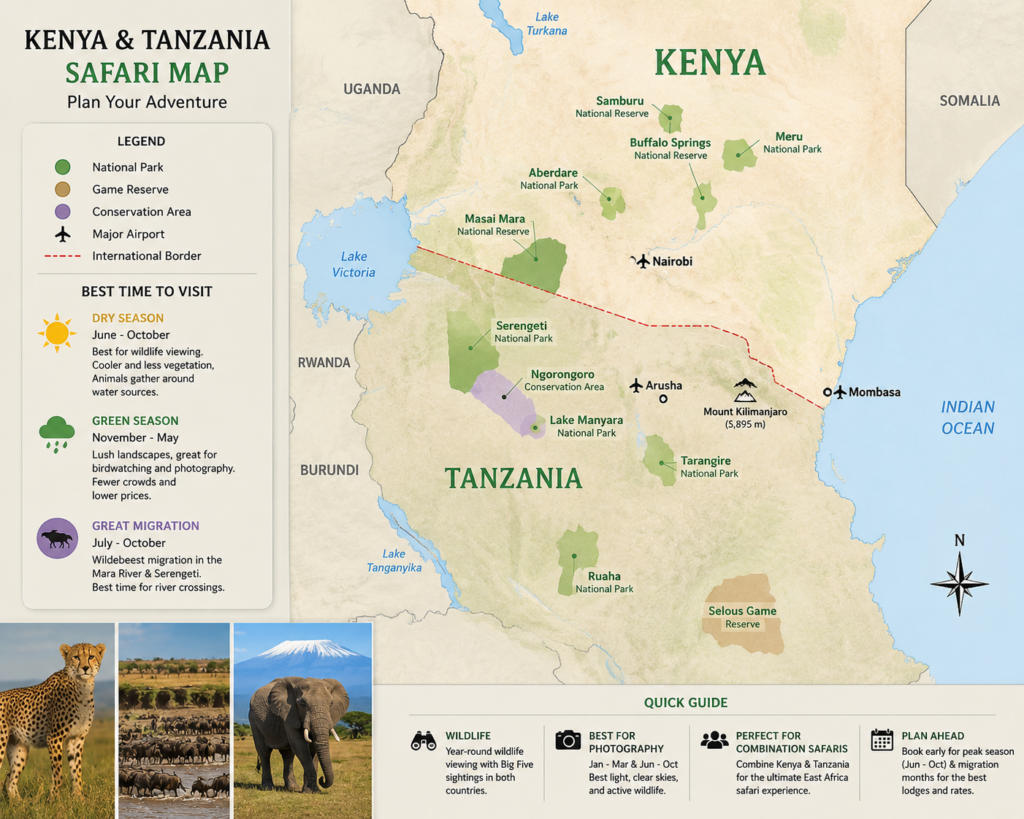
The Great Migration is the single biggest reason many travelers visit Kenya and Tanzania. Let me explain the best time for migration viewing.
Understanding the Great Migration
The Great Migration is a year round movement of animals across the Serengeti ecosystem. More than 1.5 million wildebeest, along with hundreds of thousands of zebras and gazelles, follow the rains in search of fresh grazing.
The wildebeest migration Kenya and Tanzania experience is not a single event. It is a continuous cycle with different phases happening in different locations throughout the year.
Calving Season in the Southern Serengeti
From December to March, the herds gather on the southern Serengeti plains around Ndutu and the Ngorongoro Conservation Area. This is calving season. Approximately 8,000 wildebeest calves are born each day.
Calving season is spectacular for predator action. Lions, cheetahs, leopards, and hyenas follow the herds, picking off vulnerable calves. The grass is short, making wildlife viewing easy. This is the best time for photography safaris in Tanzania.
January to February are the peak calving months. This is the best time for Great Migration viewing in Tanzania. Prices are moderate. Crowds are manageable.
Best for: Predator photography, baby animals, drama, value.
Grumeti River Crossings
From April to June, the herds move west toward the Grumeti River. The Grumeti River is smaller than the Mara River but still presents challenges. The crossings happen in May and June.
The Grumeti is home to enormous Nile crocodiles. The crossings are less famous than the Mara River crossings, but they are often less crowded. You may have the experience almost to yourself.
May and June are the best months for Grumeti River crossings. The weather is transitioning to the dry season. Prices are moderate.
Best for: River crossings, fewer crowds, value.
Northern Serengeti and Mara River Crossings
From July to October, the herds gather in the northern Serengeti and Kenya’s Masai Mara near the Mara River. This is when the famous Mara River crossings occur.
August is often the best month for dramatic crossing action. The main herds are concentrated around the Mara River. September continues to offer excellent crossings, with high wildlife density across the plains.
July to October is the best time for Great Migration viewing in Kenya. This is the peak safari season. Prices are highest. Crowds are largest.
Best for: Mara River crossings, dramatic action, classic safari experience.
Northern Serengeti Migration
From July to October, the herds are in the northern Serengeti as well as the Masai Mara. The northern Serengeti migration offers excellent viewing with fewer crowds than the Mara.
August and September are the peak months. The herds are spread across the northern Serengeti plains. Predator viewing is excellent.
Best for: Migration viewing, fewer crowds than Masai Mara.
Return South
From November to December, the herds begin their journey back south. They leave Kenya and cross the Mara River one last time. They move through the central Serengeti toward the southern plains.
November to December offers good migration viewing with fewer crowds and lower prices. The short rains bring green landscapes.
Best for: Migration viewing, value, fewer crowds.
Dry Season vs Green Season Safari
Let me compare the dry season vs green season safari experience directly.
Wildlife Visibility
During the dry season, wildlife visibility is at its best. Vegetation is sparse. Animals gather around water sources. You can see great distances across the plains.
During the green season, wildlife is more dispersed because water is abundant. The grass is tall, making sightings more challenging. However, the action is often more dramatic because predators are hunting in the lush cover.
Winner for visibility: Dry season.
Wildlife Behavior
The dry season concentrates animals around water. This creates predictable viewing opportunities. The Great Migration crossings are at their peak.
The green season offers calving season in the southern Serengeti. This is the most dramatic predator action of the year. The herds are also more spread out, creating a more natural viewing experience.
Winner for behavior: Green season for calving, dry season for crossings.
Pricing
Dry season prices are thirty to fifty percent higher than green season. This applies to accommodation, park fees, and flights.
Green season offers significant savings. You can often get the same safari for half the price.
Winner for pricing: Green season.
Crowds
Dry season crowds are at their peak. The parks can feel busy, especially near river crossings.
Green season crowds are minimal. You can have entire game drives without seeing another vehicle.
Winner for crowds: Green season.
Photography
Dry season offers clear skies and golden light. The wildlife is concentrated, making it easier to capture dramatic images.
Green season offers dramatic skies with towering clouds. The landscapes are lush and green. Calving season provides extraordinary predator photography opportunities.
Winner for photography: Both, depending on what you want to capture.
Overall Recommendation
For first time safari travelers, the dry season from June to October is the best choice. The wildlife viewing is reliable. The weather is predictable. The experience is classic.
For budget travelers and photographers, the green season from January to March is excellent. Calving season is spectacular. Prices are lower. Crowds are thinner.
For birdwatchers, November to December and April to May offer the best migratory bird viewing.
Best Time for Photography Safaris
Photography is a priority for many safari travelers. Let me explain the best time for photography safaris in Kenya and Tanzania.
January to March
January to March offers extraordinary predator photography. Calving season in the southern Serengeti means intense action. Lions, cheetahs, leopards, and hyenas are hunting constantly. The light is golden and warm.
This is the best time for photography in Tanzania. The landscapes are lush from recent rains. The skies are clear. The animals are active.
Best for: Predator action, calving, warm light.
June to October
June to October offers the best wildlife concentration. The Great Migration river crossings provide dramatic action. The light is clear and crisp. The wildlife is abundant.
This is the best time for photography in Kenya. The Masai Mara offers iconic scenes of lions on the plains and wildebeest crossing rivers.
Best for: Migration crossings, classic safari images, abundant wildlife.
November to December
November to December offers dramatic skies and lush landscapes. The short rains bring towering clouds and stunning sunsets. The wildlife is healthy and active.
This is a great time for landscape photography. The green season transforms the savannah into a lush paradise.
Best for: Landscapes, dramatic skies, fewer crowds.
Cheapest Time to Visit Kenya and Tanzania
Budget is a major factor for many travelers. Let me explain the cheapest time to visit Kenya and Tanzania.
April to May
April and May are the cheapest months. The long rains mean lower demand. Safari prices drop by up to fifty percent. Flights are often cheaper. Accommodation is more available.
The downside is the rain. Roads can be muddy. Some camps close. Wildlife viewing requires more patience.
Best for: Maximum savings, birdwatching, lush landscapes.
November
November offers excellent value. The short rains have just begun. The landscape is green. Crowds are thin. Prices are lower than peak season.
The rains are usually brief afternoon showers. Mornings are often sunny. Wildlife viewing is still excellent.
Best for: Value, green landscapes, fewer crowds.
Shoulder Seasons
January to February and June are shoulder seasons. Prices are lower than peak but higher than the rainy months. The weather is generally good. Crowds are manageable.
Best for: Balance of value and quality.
Frequently Asked Questions
What is the best month to visit Kenya and Tanzania?
The best month depends on your priorities. For the Great Migration river crossings, August and September are the best. For calving season and predator action, February is the best. For lower prices and fewer crowds, November is excellent. For the classic safari experience, July to October is ideal.
Is Kenya or Tanzania better for safari?
Both are exceptional. Kenya is generally more budget friendly and offers the Masai Mara. Tanzania offers the Serengeti and Ngorongoro Crater. For a shorter safari, Kenya is better. For a longer safari of eight to twelve days, Tanzania is better. The choice depends on your priorities and budget.
When is the Great Migration?
The Great Migration is a year round event. The herds calve in the southern Serengeti from January to March. They move west to the Grumeti River from April to June. They gather in the northern Serengeti and Masai Mara from July to October. They move back south from November to December.
What is the rainy season in East Africa?
East Africa has two rainy seasons. The long rains fall from March to May. The short rains fall from November to December. The short rains are usually brief afternoon showers. The long rains can be more disruptive.
Is safari better in dry season or green season?
Dry season offers better wildlife visibility and reliable weather. Green season offers lower prices, fewer crowds, lush landscapes, and calving season action. The best choice depends on your priorities.
What month is cheapest for safari?
April and May are the cheapest months. November also offers good value. The long rains in April and May mean lower demand and lower prices.
When is the best time for wildlife photography?
January to February offers extraordinary predator photography during calving season. July to October offers dramatic migration crossings. November to December offers dramatic skies and lush landscapes.
What is the best time to visit Serengeti and Masai Mara?
For the Masai Mara, July to October is the best time for migration crossings. For the Serengeti, January to March is the best time for calving season, and June to October is the best time for migration crossings.
What is the Kenya safari weather like?
Kenya safari weather varies by season. The dry season from June to October is sunny and cool. The green season from November to May has afternoon showers. Temperatures range from 20 to 28 degrees Celsius year round.
What is the Tanzania safari weather like?
Tanzania safari weather follows a similar pattern. The dry season from June to October is sunny and cool. The green season from November to May has afternoon showers. Temperatures range from 20 to 30 degrees Celsius year round.
What is the best time for a family safari?
The dry season from June to October is best for family safaris. The weather is predictable. Roads are good. Wildlife is easy to spot. The green season from January to March also works well with lower crowds and lower prices.
When should I avoid safari in Kenya and Tanzania?
April and May are the most challenging months. The long rains can make roads muddy and difficult. Some camps close for maintenance. Wildlife viewing requires more patience. However, these months offer the lowest prices and fewest crowds.
Your Safari Planning Starts Here
You now have a complete picture of the best time to visit Kenya and Tanzania for safari in 2026. You understand the Kenya and Tanzania safari seasons. You know the Kenya safari weather and Tanzania safari weather month by month. You have the Great Migration timing figured out. You know the dry season vs green season safari differences. You have the best time for photography safaris. And you know the cheapest time to visit.
So what is next?
Do not let the seasonal choices overwhelm you. Every season in East Africa has something special to offer. The key is matching your priorities with the right timing.
At Probe Safaris, we help travelers choose the perfect season for their safari. We know where the migration will be. We know which camps offer the best value. We know how to plan around the weather.
Contact Probe Safaris today
Tell us your travel preferences, how many people are in your group, and your target budget. We will recommend the best time for your safari and send a custom itinerary within 24 hours.
Email
info@probeafricasafaris.com
probeafricasafarisltd@gmail.com
Call or WhatsApp
(+254) 741 017 793
(+254) 706 265 710
Visit our office
Venus Complex, 1st Floor Room 4107
Northern Bypass, Nairobi, Kenya
Contact page
https://probeafricasafaris.com/contact/
Click below to start planning your East Africa safari
[Get Your Free Safari Quote Today]
Your perfect safari timing is waiting. Let us help you find it.