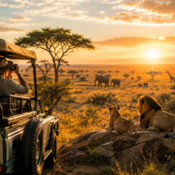
I still remember the first time I saw the Masai Mara. The sun was just beginning to paint the sky in shades of orange and pink. A lioness walked across the grassland, her golden coat blending perfectly with the morning light. Behind her, three cubs tumbled over each other, completely oblivious to the world watching them. That moment changed how I understand wild places.
The Masai Mara is not just another national reserve. It is the heart of Kenya’s safari experience. It is where the Great Migration reaches its dramatic climax. It is where you can see the Big Five in a single morning. It is where the African safari dream comes alive.
In this complete Masai Mara Safari Guide for 2026, I will walk you through everything you need to know. We will cover wildlife viewing, the Great Migration, safari costs, the best time to visit, where to stay, how many days you need, and so much more. By the end, you will feel ready to plan your own Masai Mara adventure.
Let me be your guide. I have explored this reserve more times than I can count, and I want to share everything I have learned. This Masai Mara travel guide is designed to answer every question you might have about your safari in Masai Mara.
Why Visit the Masai Mara
The Masai Mara National Reserve is Kenya’s most famous safari destination. For good reason. It offers a Masai Mara wildlife safari experience that rivals anywhere else in Africa.
First, the animal density is extraordinary. The Mara supports large populations of lions, leopards, elephants, buffalo, and countless other species. You rarely drive for more than a few minutes without spotting something remarkable. The Masai Mara safari experience is truly world class.
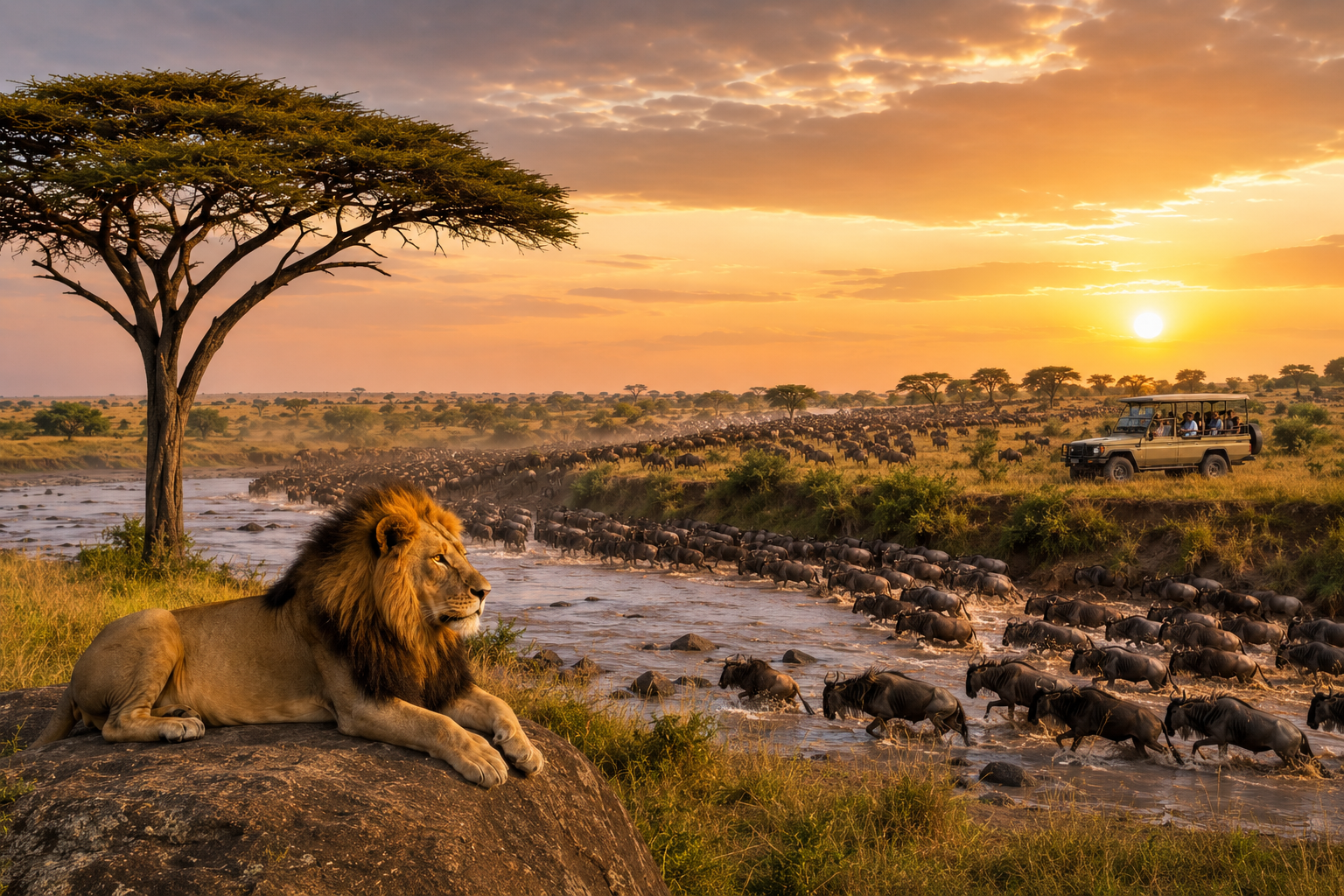
Second, the Great Migration passes through the Mara. This is the largest overland animal movement on earth. More than 1.5 million wildebeest, along with hundreds of thousands of zebras and gazelles, cross from Tanzania’s Serengeti into the Masai Mara between July and October. The Mara River crossings are among the most dramatic wildlife spectacles anywhere on the planet. A migration safari Kenya offers is something every wildlife lover should witness.
Third, the landscape is stunning. Rolling grasslands stretch to the horizon. Acacia trees dot the plains. The Mara River winds through the reserve, providing water for wildlife and dramatic backdrops for photography. The sunrises and sunsets alone are worth the journey.
Fourth, the Masai Mara safari tours infrastructure is well developed. You will find Masai Mara accommodation for every budget, from budget camps to luxury safari camps. Professional guides know the reserve intimately. The infrastructure makes planning your Masai Mara safari packages straightforward.
Many travelers ask me whether the Masai Mara is worth visiting compared to other destinations. The answer is absolutely yes. Even without the migration, the resident animals in Masai Mara make the reserve world class. With the migration, it becomes truly unforgettable.
What is Masai Mara
For those asking what is Masai Mara, let me explain. The Masai Mara is a large game reserve in southwestern Kenya, named in honor of the Maasai people who have lived here for centuries. The word Mara in the local Maasai language means spotted, referring to the way the landscape looks dotted with trees and shadows.
The reserve covers approximately 1,510 square kilometers. It is part of the larger Serengeti ecosystem, which extends into Tanzania. There are no fences between the Masai Mara and the Serengeti, allowing wildlife to move freely across the border.
The Masai Mara is managed by the Narok County Council, while surrounding conservancies are managed by partnerships between Maasai landowners and safari operators. This unique management structure has helped preserve both wildlife and local culture.
Why Visit Masai Mara
There are countless reasons why visit Masai Mara should be on your bucket list. The wildlife viewing is exceptional year round. The landscape is breathtaking. The Maasai culture adds a rich human dimension to your safari. And the Great Migration is a natural wonder that has to be seen to be believed.
For first time safari travelers, the Masai Mara is the perfect introduction to Africa. The game drives are productive, the lodges are comfortable, and the guides are experienced. You will leave with memories that last a lifetime.
Where is the Masai Mara
The Masai Mara National Reserve is located in southwestern Kenya. It sits along the border with Tanzania, where it connects directly with the Serengeti National Park. Together, these two protected areas form the Serengeti ecosystem, one of the largest and most important wildlife habitats on earth.
The reserve covers approximately 1,510 square kilometers. That is roughly the size of London, but with far fewer buildings and far more wildlife. Surrounding the reserve are several private conservancies that add another 1,000 square kilometers or so of protected land. These conservancies offer even more exclusive safari experiences.
Getting to the Masai Mara is straightforward. Most travelers fly into Nairobi’s Jomo Kenyatta International Airport. From there, you have two options for reaching the Mara. You can take a domestic flight from Wilson Airport in Nairobi to one of several airstrips in the reserve. These flights take about 45 minutes. Alternatively, you can drive from Nairobi. The drive takes approximately five to six hours depending on road conditions and your final destination within the reserve.
I usually recommend flying for travelers with limited time. The views from the small plane are spectacular, and you save valuable safari hours. For those on a tighter budget or who enjoy road trips, the drive is absolutely fine. The roads have improved significantly in recent years, and the journey passes through the beautiful Rift Valley scenery.
Wildlife You Can See in the Masai Mara
The animals in Masai Mara are the main reason you are reading this guide. Let me tell you exactly what you can expect to see during your Masai Mara wildlife safari. This is what makes an African safari in Kenya so special. Masai Mara game viewing is among the best in the world.
The Big Five Masai Mara
The Big Five Masai Mara offers are among the most sought after sightings on any African safari. The Masai Mara delivers on all five.
Lions are abundant in the Mara. The reserve supports one of the highest lion densities in Africa. You will see them resting under acacia trees, hunting on the grasslands, or raising cubs on rocky outcrops. The pride dynamics are fascinating to watch. Predator viewing in the Mara is world class, with Masai Mara predator sightings happening almost daily.
Leopards are more elusive, but the Mara has a healthy population. The riverine areas and rocky kopjes provide perfect habitat. A good guide knows where to look. When you do spot a leopard draped over a tree branch with an impala carcass, you will understand why they are so prized. Masai Mara predator sightings of leopards are always special.
Elephants are widespread throughout the reserve and surrounding conservancies. Large herds move through the woodlands and grasslands. Watching a matriarch lead her family to water is a special experience.
Buffalo are everywhere. Large herds graze across the plains. Be careful, though. Buffalo are among the most dangerous animals in Africa. They look calm, but they can be aggressive if threatened.
Rhinos are the most difficult of the Big Five to see in the Masai Mara. The reserve has both black and white rhinos, but they are not as common as in some other Kenyan parks. Your best chance is in the more remote areas of the reserve or in the nearby Ol Pejeta Conservancy. That said, dedicated travelers do see rhinos in the Mara.
Predators Beyond the Big Five
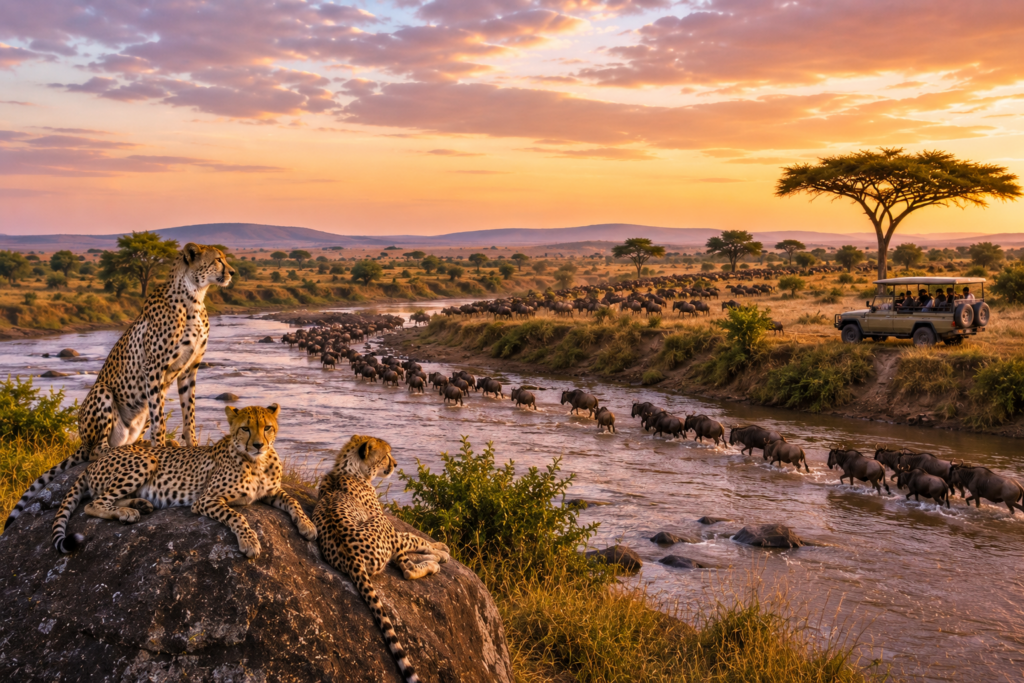
The Masai Mara is predator paradise. Beyond lions and leopards, you have excellent chances of seeing cheetahs. The open grasslands of the Mara are perfect cheetah habitat. These sleek hunters use termite mounds as vantage points to scan for prey. Seeing a cheetah sprint across the plains is a highlight of any safari. Predator viewing in this reserve is simply outstanding. Masai Mara game drives often feature incredible predator action.
Spotted hyenas are common and fascinating. They live in large clans and are highly intelligent. You might see them hunting, resting at their dens, or interacting with other predators. Despite their reputation, they are remarkable animals.
Jackals and bat eared foxes are smaller predators that add variety. African wild dogs are less common but occasionally seen, especially in the conservancies. A wild dog sighting is considered very lucky.
Herbivores and Other Animals in Masai Mara
The Masai Mara supports an incredible diversity of herbivores. You will see vast herds of wildebeest and zebras, especially during the migration season. Giraffes browse on acacia trees across the reserve. The Masai giraffe is the most common species.
Thomson’s and Grant’s gazelles graze on the short grass plains. Topi and hartebeest are also common. Impalas are everywhere, often serving as the primary prey for lions and leopards.
Hippos crowd into the Mara River and other water sources. You can watch them from safe viewing points. Crocodiles sunbathe on riverbanks, waiting for unsuspecting wildebeest during the migration.
Birdlife in the Masai Mara
Even if you are not a dedicated birder, the birdlife in the Masai Mara will impress you. Over 470 bird species have been recorded in the reserve.
Secretary birds stalk through the grasslands, hunting snakes and small mammals. Lilac breasted rollers perch on branches, flashing their stunning purple and turquoise feathers. Crowned cranes dance in pairs. Ostriches, the world’s largest birds, roam the plains.
African fish eagles call out from perches near water. Martial eagles soar overhead. Vultures circle above kills, waiting for their turn. The variety is endless.
A good Masai Mara travel guide will help you appreciate the birds as much as the mammals. Even non birders find themselves reaching for binoculars. A Masai Mara photography safari is a dream for bird lovers and big cat enthusiasts alike.
The Great Migration in the Masai Mara
The Great Migration Masai Mara is famous for is the single biggest reason many travelers visit the reserve. Let me explain what the wildebeest migration Kenya experience entails, when it happens, and how to see it.
Understanding the Wildebeest Migration
The Great Migration is a year round movement of animals across the Serengeti ecosystem. More than 1.5 million wildebeest, 500,000 zebras, and 300,000 gazelles follow the rains in search of fresh grazing and water. They travel in a giant clockwise loop from Tanzania’s Serengeti into Kenya’s Masai Mara and back again.
The wildebeest migration Kenya experience is famous because of the Mara River crossings. Unlike the Grumeti River in Tanzania, the Mara River is deep and full of crocodiles. Watching the herds gather on the riverbanks, hesitate, and then surge across is absolutely gripping. A migration safari Kenya offers is unlike anything else in the natural world.
When Does the Great Migration Arrive in Masai Mara
The best time for Great Migration viewing in the Masai Mara is from July to October. Here is a month by month breakdown.
July marks when the migration arrives in Masai Mara. The lead elements of the migration begin crossing from the Serengeti into the Mara. The herds gather along the Mara River. Crossings become more frequent as the month progresses.
August is peak migration season in the Mara. The herds are spread across the northern and western parts of the reserve. Crossings happen regularly. The action is intense. This is widely considered the best time for Great Migration viewing.
September continues to offer excellent crossing opportunities. The herds remain in the Mara. The weather is dry, making game drives comfortable.
October still offers good viewing, though the herds begin moving back toward Tanzania. Crossings still occur, but they become less predictable. By late October, most of the wildebeest have left the Mara.
November brings the short rains. The migration continues its southward journey into the Serengeti. The Masai Mara is quieter, but resident wildlife remains excellent.
Mara River Crossings
The Mara River crossings are the highlight of the wildebeest migration Kenya experience. The Mara River winds through the Masai Mara, and several crossing points are famous for migration action.
The Kichwa Tembo area in the western part of the reserve is popular for Mara River crossings. The Sand River area in the east also sees crossings. Your guide will know where to position based on current herd movements.
Remember that river crossings are never guaranteed. The wildebeest are wild animals following their instincts. Some days they cross all day long. Other days they just stand on the riverbanks and watch. Part of the magic is the unpredictability.
If you miss the main crossings, do not worry. The herds themselves are spectacular to see. Millions of animals stretching to the horizon is an unforgettable sight even without river action.
Migration Hotspots
The best places to witness the Great Migration Masai Mara offers include the Mara River itself, the Sand River area, and the Lookout Hill area near the Tanzanian border. Your safari operator will have up to date information on where the herds are located during your visit.
Best Time to Visit Masai Mara
The best time to visit Masai Mara depends on what you want to see and experience. Let me break down the Masai Mara weather patterns, Masai Mara seasons, and Masai Mara safari months.
Dry Season from June to October
This is peak safari season in the Masai Mara. The Masai Mara weather is consistently sunny with little to no rain. Wildlife congregates around the Mara River and other water sources, making animals easier to spot. Vegetation is sparse, further improving visibility. These are the prime Masai Mara safari months for most travelers.
When to visit Masai Mara for the migration? This is it. From July to October, you have the best chance of witnessing river crossings.
The downsides are real, though. Masai Mara safari prices are at their highest during dry season. The reserve is crowded, especially near crossing points. Lodges and camps book out months in advance. You need to plan early.
Who should visit during dry season. First time visitors. Travelers who want the classic safari experience. Anyone whose schedule is fixed to summer months. Those who prioritize seeing the migration above all else.
Green Season from November to May
Most travelers avoid the rainy season. I think that is a mistake. The green season offers unique advantages.
From November to December, the short rains arrive. The landscape turns lush and green. The crowds disappear. Safari prices drop by thirty to fifty percent. Migratory birds return, making this the best time for birdwatching.
From January to March, the Masai Mara weather is actually quite pleasant. The rains have reduced. Wildlife is still abundant. You can enjoy the Mara without the peak season crowds.
April and May bring the long rains. Some roads become muddy. Some camps close for maintenance. I generally recommend avoiding these Masai Mara safari months unless you are on a very tight budget or are a serious birder.
Who should visit during green season. Budget conscious travelers. Photographers who want dramatic skies and lush landscapes. Return visitors who have already seen the migration. Birdwatchers. Couples seeking privacy.
Migration Season within the Dry Season
If your goal is specifically to see the Great Migration, focus on July through October. August and September are the most reliable months for river crossings. July and October are also good but slightly less predictable.
Just understand that you will be sharing the reserve with many other visitors. The best camps book up. Prices are high. Patience is required. All of that said, witnessing a crossing is worth the crowds.
When to visit Masai Mara ultimately depends on your priorities. For migration, choose July to October. For value and privacy, choose January to March. For birdwatching, choose November to December.
How Much Does a Masai Mara Safari Cost
Masai Mara safari cost is one of the most common questions I receive. The answer varies based on accommodation, season, duration, and whether you choose a private or group safari. Understanding Masai Mara safari prices helps you budget appropriately.
Let me give you realistic Masai Mara safari prices for 2026.
Budget Masai Mara Safaris
Affordable Masai Mara safaris typically cost between 150 and 250 US dollars per person per day. Accommodation is in basic campsites or simple guesthouses outside the reserve. Transport is in safari vans rather than proper 4×4 vehicles. Meals are basic but filling.
These affordable Masai Mara safaris work best for backpackers, solo travelers, or groups on very tight budgets. You will still see amazing wildlife. You just need to expect fewer comforts and more shared facilities. Your Masai Mara safari budget will stretch further with this option.
Mid Range Masai Mara Safaris
Mid range safaris cost between 300 and 600 US dollars per person per day. This is the sweet spot for most travelers from the United States, Canada, Europe, and Australia.
Accommodation is in comfortable tented camps or permanent lodges with private bathrooms, hot showers, and often swimming pools. Transport is in proper 4×4 Land Cruisers with pop up roofs for excellent viewing. Meals are buffets or plated dinners with good variety.
Most Masai Mara safari packages fall into this price range. You get excellent value without breaking the bank.
Luxury Masai Mara Safaris
Luxury Masai Mara safari cost starts around 800 US dollars per person per day and can exceed 2,000 dollars for high end camps.
Accommodation is in exclusive lodges or tented camps with private decks, outdoor showers, fine dining, and exceptional service. Many luxury safaris include private vehicles and personal guides. Extras like hot air balloon safaris, bush dinners, and spa treatments are often included.
Luxury Masai Mara safari cost is high, but the experience is unparalleled. These are perfect for honeymoons, milestone celebrations, or travelers who value comfort and exclusivity. A luxury Masai Mara safari delivers an unforgettable experience.
Realistic Masai Mara Safari Budget Example
A three night, four day Masai Mara safari in mid range accommodation during peak season will cost approximately 1,200 to 2,000 US dollars per person. This includes park fees, transport from Nairobi, accommodation, most meals, and game drives. International flights are extra.
A five night, six day safari adding a night at Lake Nakuru might cost 2,000 to 3,000 US dollars per person.
These are realistic Masai Mara safari prices. Cheaper options exist, but you sacrifice comfort and vehicle quality. More expensive options exist, but you might be paying for frills you do not need. Your Masai Mara safari budget should also account for tips, souvenirs, and optional activities.
Where to Stay in the Masai Mara
Where to stay in Masai Mara dramatically affects your safari experience. Let me walk through Masai Mara accommodation options including the best camps in Masai Mara, luxury camps Masai Mara offers, Masai Mara lodges, and Masai Mara safari camps.
Luxury Camps Masai Mara
Luxury camps Masai Mara offers provide the ultimate safari experience. These Masai Mara safari camps combine exceptional locations, outstanding service, and incredible wildlife viewing.
Angama Mara overlooks the Great Rift Valley with stunning views. The name means suspended in the air in Swahili, and you will understand why when you see the location. This is among the best camps in Masai Mara for honeymooners.
Governors Camp was the first tented camp in Kenya, set along the Mara River. Hippos grunt in the water outside your tent at night. The migration crossings happen right in front of the camp.
Mahali Mzuri is Sir Richard Branson’s camp in the Olare Motorogi Conservancy. It offers privacy, excellent guiding, and beautiful design.
These luxury camps Masai Mara offers charge between 1,000 and 2,000 dollars per person per night.
Mid Range Masai Mara Lodges
Mid range Masai Mara lodges offer excellent comfort without the extreme prices.
Ashnil Mara Camp has a great location near the Mara River. It is a favorite for migration viewing.
Mara Serena Safari Lodge sits on a hill with panoramic views of the reserve. The architecture is inspired by Maasai manyattas.
Fig Tree Camp offers tented rooms and permanent buildings right on the Talek River. It is popular with families and couples alike.
You can expect private bathrooms, good food, swimming pools, and solid guiding. Prices range from 300 to 600 dollars per person per night.
Budget Masai Mara Safari Camps
Budget Masai Mara safari camps include campsites inside the reserve and basic lodges just outside.
Enchoro Wildlife Camp offers simple but clean accommodations at reasonable prices. It is located just outside the Sekenani Gate.
Manyara Camp provides basic tents with shared facilities. It is a good option for travelers watching every dollar.
Budget travelers can also stay outside the reserve in towns like Sekenani and drive in daily. Expect to pay 100 to 200 dollars per person per night.
Staying in the Conservancies
The conservancies surrounding the Masai Mara offer a different Masai Mara accommodation experience. These are private lands where Maasai landowners have partnered with safari operators to protect wildlife and limit vehicle density.
The benefits are significant. Fewer vehicles means more exclusive game drives. You can go off road to follow predators. Night drives and walking safaris are allowed, which are not permitted inside the main reserve.
Top conservancies include Olare Motorogi, Mara North, Naboisho, and Ol Kinyei. Prices are generally higher than inside the main reserve, but the experience is worth it for many travelers.
Luxury safari camps in these conservancies offer some of the best Masai Mara safari experiences in all of Africa.
How Many Days in Masai Mara
How many days in Masai Mara is enough. This depends on your goals, budget, and available time. Let me be realistic about Masai Mara itinerary options.
2 Days in Masai Mara
Two days is too short. You will drive from Nairobi one day, do one game drive, sleep one night, do a morning drive, and drive back. You will be exhausted, and you will likely miss many animals.
Only choose a 2 day Masai Mara safari if you have no other option. You will still see wildlife, but you will leave wanting more.
3 Day Masai Mara Safari
A 3 day Masai Mara safari is the minimum for a real experience. You arrive on day one, do a late afternoon drive. You have a full day of game drives on day two, morning and afternoon. You do a final morning drive on day three before departing.
This gives you four game drives. You have a real chance at seeing the Big Five and maybe some migration action if the timing is right.
3 day Masai Mara safari packages are popular for good reason. They work for travelers on tight schedules.
4 Day Masai Mara Safari
A 4 day Masai Mara safari is better. You get three full days in the reserve. This allows you to explore different areas. You can spend one day near the Mara River, another in the eastern plains, another near the Tanzanian border.
A 4 day Masai Mara safari gives you breathing room. You are not rushing from one sighting to another. You can sit with a pride of lions for an hour without worrying about the schedule.
5 Day Masai Mara Safari
A 5 day Masai Mara safari is ideal for serious wildlife enthusiasts. You can visit both the main reserve and a private conservancy. You can do a full day game drive with a picnic lunch. You can book a hot air balloon safari. You can visit a Maasai village.
Longer stays also increase your chances of witnessing dramatic events like a lion kill or a river crossing. Wildlife does not perform on schedule. Giving yourself more days is the best way to guarantee memorable experiences.
For most first time visitors, I recommend a 4 day Masai Mara safari. It balances cost, experience, and comfort.
Masai Mara Itinerary Ideas
Let me share sample Masai Mara itinerary options.
3 Day Masai Mara Safari Itinerary
Day one: Fly or drive from Nairobi to the Masai Mara. Arrive in time for lunch and an afternoon game drive.
Day two: Full day of game drives. Morning drive starting at 6.30 AM. Return to camp for lunch and rest. Afternoon drive from 4.00 PM until sunset.
Day three: Early morning game drive, then breakfast, then depart for Nairobi.
4 Day Masai Mara Safari Itinerary
Day one: Arrive and afternoon game drive.
Day two: Full day game drive with picnic lunch. Explore the Mara River area.
Day three: Morning drive in the eastern plains, afternoon drive near the Tanzanian border.
Day four: Final morning drive and departure.
5 Day Masai Mara Safari Itinerary
Day one: Arrival and afternoon drive.
Day two: Full day exploring the central Mara.
Day three: Optional hot air balloon safari at sunrise, then a full day drive.
Day four: Visit a private conservancy for off road driving.
Day five: Final morning drive and departure.
Family Safaris in the Masai Mara
Family safari Masai Mara is absolutely possible and can be wonderful. The Masai Mara is one of the best destinations for a family safari Kenya experience. A family friendly safari Kenya should be fun for everyone, and the Mara delivers.
Many Masai Mara lodges and camps welcome children. Some have dedicated family rooms, kids programs, and babysitting services. Governors Camp has family tents. Fig Tree Camp has interconnecting rooms. Ashnil Mara Camp has family suites. These family safari packages Masai Mara offer make traveling with children much easier.
Younger children typically enjoy shorter game drives of two to three hours. Older children can handle full day drives. Most lodges offer flexibility to customize your daily schedule. A Masai Mara with kids trip requires some adjustments, but it is absolutely worth it.
The wildlife is endlessly fascinating for kids. Seeing a lion or elephant up close is something they will never forget. The Maasai culture also interests many children. Visiting a Maasai village is educational and interactive. Maasai villages offer dance performances, craft demonstrations, and a glimpse into traditional life. Maasai culture is rich and fascinating, and a village visit supports local communities.
Safety is paramount on family safaris. Children must stay inside the vehicle at all times during game drives. They must remain quiet when animals are close. Your guide will give clear instructions. Follow them.
I recommend the dry season from June to October for family safaris. The Masai Mara weather is predictable, roads are good, and animals are easier to spot. Avoid the long rains in April and May when roads can be difficult.
Family friendly safari Kenya options are more abundant than many travelers realize. Do not hesitate to bring your children. They will thank you later.
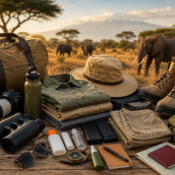
Masai Mara Packing List
Packing properly makes your Masai Mara safari more comfortable and enjoyable. Here is my practical Masai Mara packing list.
Clothing should be neutral colors. Olive, tan, brown, and khaki work best. Avoid bright colors which attract insects and can disturb wildlife. Also avoid blue and black, which attract tsetse flies.
Pack long sleeved shirts and long pants. These protect against morning cold, evening mosquitoes, and intense sun. A fleece or lightweight jacket is essential for early morning game drives when temperatures can be near freezing in an open vehicle.
Shorts and short sleeved shirts work well for midday when the sun is high. A swimsuit is useful as many lodges and camps have pools.
Comfortable closed toe shoes or hiking boots are best for game drives. You will be climbing in and out of vehicles on dusty ground.
Gear is as important as clothing. Binoculars are absolutely essential. A good pair will enhance your safari more than an expensive camera. For cameras, bring a zoom lens of at least 300 millimeters. Four hundred millimeters is even better. A Masai Mara photography safari requires proper equipment.
A power bank helps even though safari vehicles have charging ports. A headlamp or small flashlight is useful at night when walking between tents or rooms.
Health and document essentials include your passport, visa, travel insurance, malaria prophylaxis, sunscreen, insect repellent, and any prescription medications.
Leave jeans at home. They are too stiff and hot for safari. Leave high heels, formal wear, and drones which are illegal in national parks.
Masai Mara Travel Tips
Let me share insider knowledge that will improve your Masai Mara safari experience. These Masai Mara travel tips come from years of exploring this reserve.
First, listen to your guide. They have spent years learning the reserve and its wildlife. They know where to find animals and how to approach safely. Trust their judgment. This is true for any African safari.
Second, be patient. Wildlife does not perform on command. Some Masai Mara game drives are quiet. Others are action packed. The quiet moments make the dramatic moments even better. Masai Mara game drives are about quality, not quantity.
Third, respect the animals. Stay inside the vehicle unless your guide says otherwise. Keep noise down. Do not try to attract animal attention. Good wildlife viewing is about observing, not interfering.
Fourth, bring cash. The Masai Mara has no ATMs. Credit cards work at some lodges but not all. Bring US dollars or Kenyan shillings for tips, souvenirs, and incidentals. Masai Mara travel tips always include this warning for good reason.
Fifth, book early for peak season. The best camps book up six to twelve months in advance for July through October. If you want to visit during migration, plan ahead. This applies to Masai Mara holidays and regular travel alike.
Sixth, consider the conservancies. They offer more exclusive experiences than the main reserve. Yes, they cost more. The reduced vehicle density and off road driving privileges are worth it for many travelers.
Seventh, do not skip the hot air balloon safari. It is expensive, around 450 US dollars per person. The sunrise views over the Mara are spectacular. Floating over herds of wildlife is unforgettable. Most balloon safaris include a champagne breakfast in the bush. A balloon safari Masai Mara offers is one of the most magical experiences anywhere in Africa.
Eighth, visit a Maasai village if you have time. The Maasai people have lived alongside wildlife for centuries. Learning about Maasai culture adds depth to your safari experience. Be respectful and ask before taking photographs.
Ninth, consider a Masai Mara photography safari if you are passionate about capturing images. The light is best at sunrise and sunset. Bring extra memory cards and batteries. A beanbag for your camera window rest is invaluable.
Tenth, understand the Serengeti ecosystem. The Masai Mara is connected to Tanzania’s Serengeti National Park. The animals move freely between them. The Great Migration is a single ecosystem event, not two separate ones. Appreciating this connection deepens your understanding of what you are witnessing.
Frequently Asked Questions About Masai Mara Safaris
Is Masai Mara worth visiting?
Absolutely. The Masai Mara offers wildlife viewing that rivals anywhere else in Africa. Even without the Great Migration, the resident animals are abundant and diverse. With the migration, it becomes truly world class. The landscape is beautiful. The safari infrastructure is excellent. Yes, it is worth every penny.
What is the best month to visit Masai Mara?
September is widely considered the best month. The weather is dry. The Great Migration is in the Mara with regular river crossings. Crowds are slightly smaller than August. October is also excellent. July and August are great but busier. These Masai Mara safari months deliver the classic experience.
How much does a Masai Mara safari cost?
A mid range three night, four day Masai Mara safari costs between 1,200 and 2,000 US dollars per person. This includes park fees, transport from Nairobi, accommodation, most meals, and game drives. International flights are extra. Masai Mara safari budget planning should also account for tips, souvenirs, and optional activities like a balloon safari.
How many days should I spend in Masai Mara?
Four days is ideal for most travelers. This gives you three full days in the reserve with four to six game drives. You have time to explore different areas and increase your chances of dramatic sightings. Three days is the minimum for a good experience. A 5 day Masai Mara safari is even better if your schedule and budget allow.
Can you see the Big Five in Masai Mara?
Yes, but with one caveat. Lions, leopards, elephants, and buffalo are all common. Rhinos are more difficult. Your best chance for rhinos is in the conservancies or combining the Mara with Lake Nakuru National Park. That said, many travelers do see rhinos in the Mara with a good guide.
When does the Great Migration arrive in Masai Mara?
The migration typically arrives in July and stays through October. August and September offer the most reliable river crossing opportunities. October is still good but the herds begin moving back to Tanzania toward the end of the month.
Which is better: Masai Mara or Serengeti?
Both are exceptional. The Serengeti is much larger and less crowded. The Masai Mara is smaller but often has higher predator density during migration season. Many serious safari travelers eventually visit both. For a first time safari focused on Kenya, the Masai Mara is perfect. The Serengeti ecosystem connects them both, so you cannot go wrong.
What should I pack for a Masai Mara safari?
Pack neutral colored clothing, long sleeves and pants, a fleece or jacket for cold mornings, comfortable closed toe shoes, binoculars, a camera with a zoom lens, sunscreen, insect repellent, your passport and visa, and any medications you need.
Can I do a self drive safari in Masai Mara?
Technically yes, but I do not recommend it. The roads are confusing. You need to know where animals are likely to be. You risk getting lost or stuck. Self drive also means you cannot go off road, which limits sightings. Hiring a professional guide is worth the cost.
Is the Masai Mara safe?
Yes. The Masai Mara is very safe for tourists. Wildlife encounters are managed carefully. Armed rangers patrol the reserve. Crime against tourists is extremely rare. Follow your guide’s instructions, stay inside the vehicle, and you will be fine.
What is a Masai Mara holiday like?
A Masai Mara holiday is a mix of game drives, excellent meals, comfortable accommodation, and time to relax between drives. Most days start early, around 6 AM, for the morning drive. You return to camp for breakfast and rest during the hot midday hours. The afternoon drive starts around 4 PM and continues until sunset. Evenings are for dinner and sharing stories around the campfire. It is a perfect balance of activity and relaxation.
What are the best Masai Mara safari packages?
The best Masai Mara safari packages include at least three nights in the reserve, transport from Nairobi, all park fees, game drives in a 4×4 vehicle, and full board accommodation. Look for packages that include a visit to both the main reserve and a conservancy for the best experience.
What can first time travelers expect on a Masai Mara safari?
For those researching Masai Mara safari for first timers, here is what to expect. Early mornings. Dusty roads. Incredible wildlife sightings. Comfortable accommodation. Delicious food. And a lifetime of memories. The key is to book with a reputable operator, listen to your guide, and embrace the adventure.
What are the best Masai Mara game drives like?
Masai Mara game drives typically happen at sunrise and late afternoon. The morning drive starts around 6.30 AM when animals are most active. You return to camp for breakfast and rest during the hot midday hours. The afternoon drive starts around 4.00 PM and continues until sunset. This schedule avoids the midday heat and maximizes wildlife viewing opportunities.
What is the Masai Mara National Reserve known for?
The Masai Mara National Reserve is known for its exceptional wildlife density, the Great Migration, the Big Five, and its stunning landscapes. It is also famous for the Maasai people who live around the reserve and the conservancies that protect both wildlife and local livelihoods.
What is the best time for Great Migration viewing?
The best time for Great Migration viewing in the Masai Mara is from July to October, with August and September offering the most reliable river crossing sightings. However, the herds are in the Mara throughout this period, so any visit between July and October offers excellent migration viewing.
What are the Masai Mara seasons?
The Masai Mara has two main seasons. The dry season from June to October offers peak wildlife viewing and migration action. The green season from November to May offers lower prices, fewer crowds, lush landscapes, and excellent birdwatching. Each Masai Mara season has unique advantages.
What is the Masai Mara weather like?
Masai Mara weather is pleasant year round. Daytime temperatures typically range from 20 to 30 degrees Celsius. Mornings and evenings can be cool, especially from June to August when temperatures can drop to 10 degrees. The rainy seasons bring short afternoon showers, usually lasting one to two hours.
Are there affordable Masai Mara safaris?
Yes, affordable Masai Mara safaris are available, especially during the green season from November to May. Budget camping options and basic lodges outside the reserve offer lower rates. You can also join group safaris rather than booking a private vehicle to reduce costs.
What is a Masai Mara wildlife safari like?
A Masai Mara wildlife safari involves daily game drives in search of animals. You will see lions, elephants, giraffes, zebras, and countless other species. If you visit between July and October, you will also witness the Great Migration. The experience is immersive, educational, and deeply moving.
Where can I find a Masai Mara travel guide?
You are reading one right now. This Masai Mara travel guide covers everything from wildlife and migration to costs, packing
Here is a strong, clear final Call to Action for the end of your Masai Mara Safari Guide.
Your Masai Mara Safari Awaits
You have made it through this complete Masai Mara safari guide. That tells me you are serious about planning this trip.
You now know why the Masai Mara National Reserve is worth visiting. You understand the wildlife you will see, from the Big Five to the Great Migration. You have a realistic Masai Mara safari budget for 2026. You know the best time to visit based on your priorities. You have packing tips, Masai Mara travel advice, and answers to the most common questions.
So what is next
Do not spend weeks scrolling through random blogs and YouTube videos. You have the information. Now you need a partner on the ground.
At Probe Safaris, we have been arranging Masai Mara safari tours for years. We know the best camps in Masai Mara. We know which guides spot the most leopards. We know where to position for the best Mara River crossings. Let us put that expertise to work for you.
Contact Probe Safaris today
Tell us your travel dates, how many people are in your group, and your dream budget. We will send you a custom Masai Mara safari itinerary within 24 hours. No pressure. No spam. Just honest advice from people who love this reserve and want to share it with you.
Email
info@probeafricasafaris.com
probeafricasafarisltd@gmail.com
Call or WhatsApp
(+254) 741 017 793
(+254) 706 265 710
Visit our office
Venus Complex, 1st Floor Room 4107
Northern Bypass, Nairobi, Kenya
Contact page
https://probeafricasafaris.com/contact/
Click below to start planning your Masai Mara safari now
[Start Planning Your Masai Mara Safari – Get a Free Quote]
Your Masai Mara adventure is waiting. Let us make it happen together.