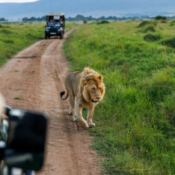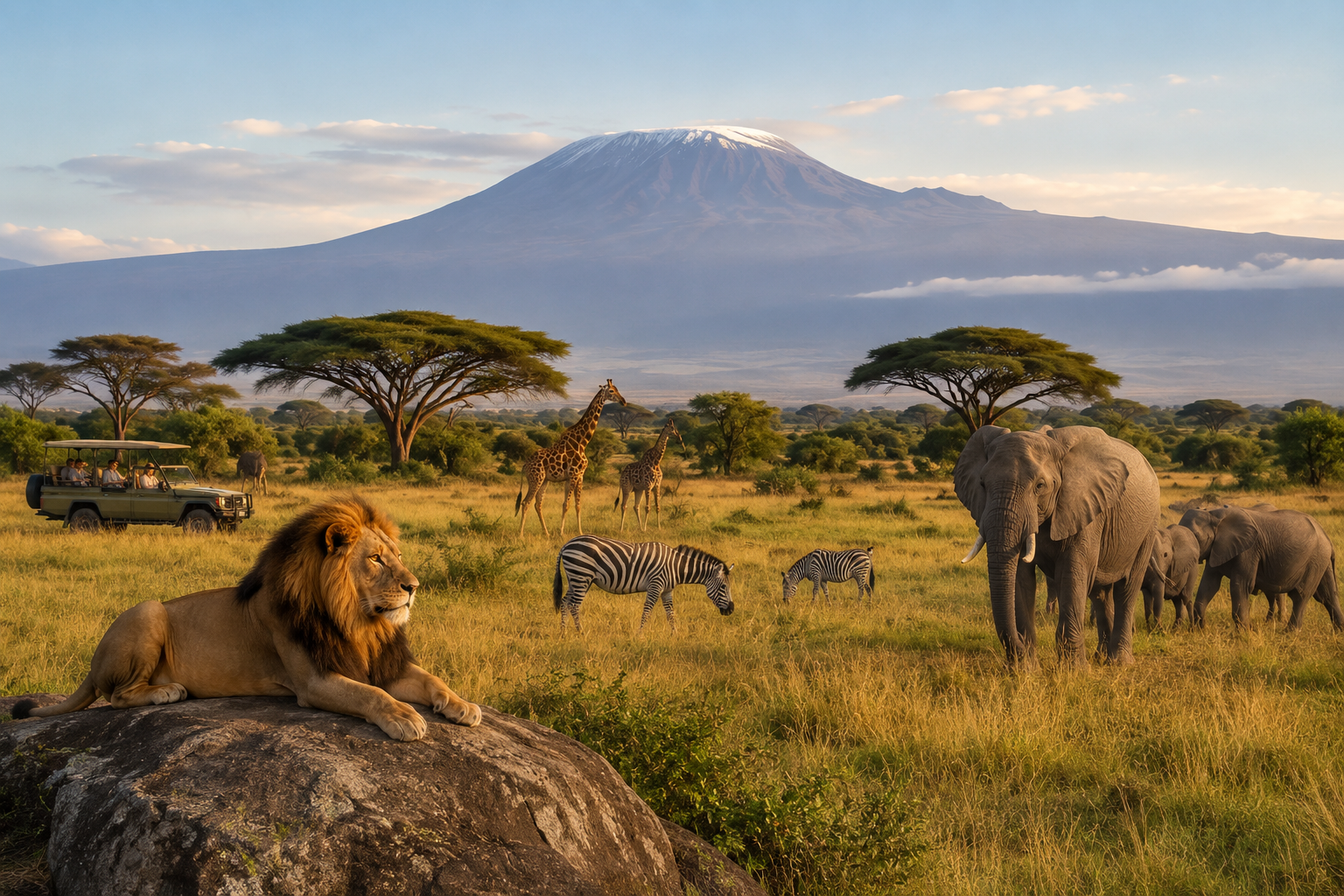
I have been exploring Tanzania’s wilderness for over a decade. I still remember my first safari in the Serengeti like it was yesterday. The sun was rising over the endless plains, painting the sky in shades of orange and gold. Then I saw them. Thousands of wildebeest stretching to the horizon, kicking up dust as they moved. That moment changed my life.
Now I want to help you experience the same magic.
Tanzania is one of Africa’s most spectacular safari destinations. It offers something truly special for every traveler. Whether you dream of witnessing the Great Migration in the Serengeti, staring into the Ngorongoro Crater, or tracking elephants in Tarangire, this country delivers unforgettable wildlife encounters.
In this complete Tanzania Safari Guide for 2026, I will walk you through everything you need to know. We will cover the best Tanzania safari destinations, costs, packing tips, visa requirements, and exactly how to plan your dream adventure.
Let me be your virtual guide. By the end of this article, you will feel confident booking your Tanzania safari vacation.
Why Choose Tanzania for a Safari
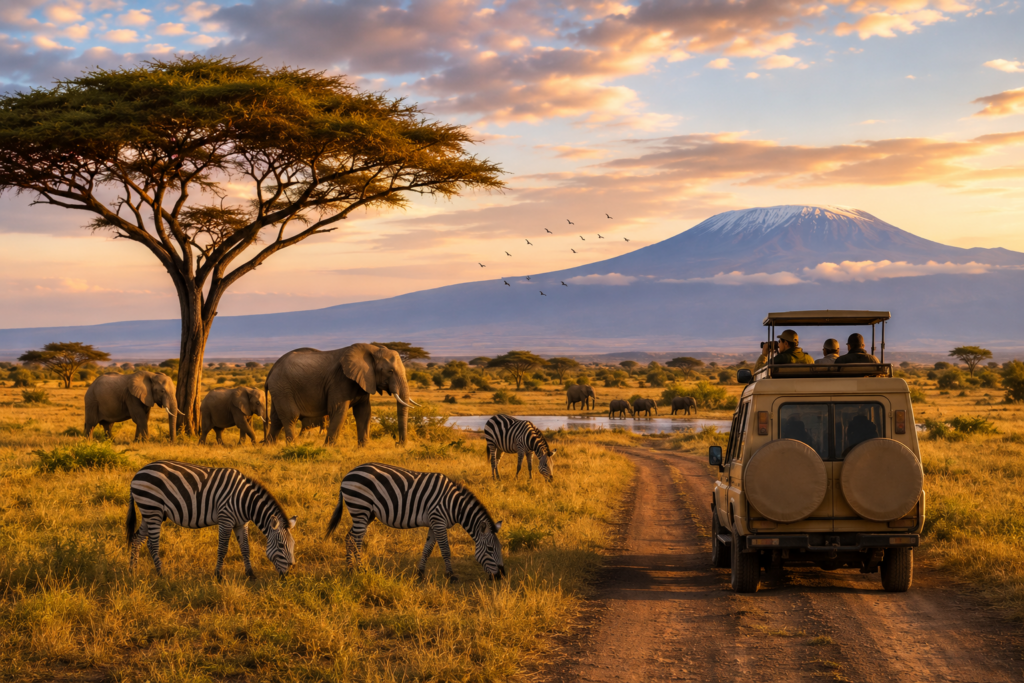
Tanzania is not just another safari destination. It is the gold standard.
The country protects over 30 percent of its land through national parks and conservation areas. This commitment to wildlife preservation means you will see animals in vast, natural landscapes rather than crowded reserves.
Here is why travelers from the USA, Canada, Europe, Australia, China, and Korea keep choosing Tanzania for their safari in Tanzania.
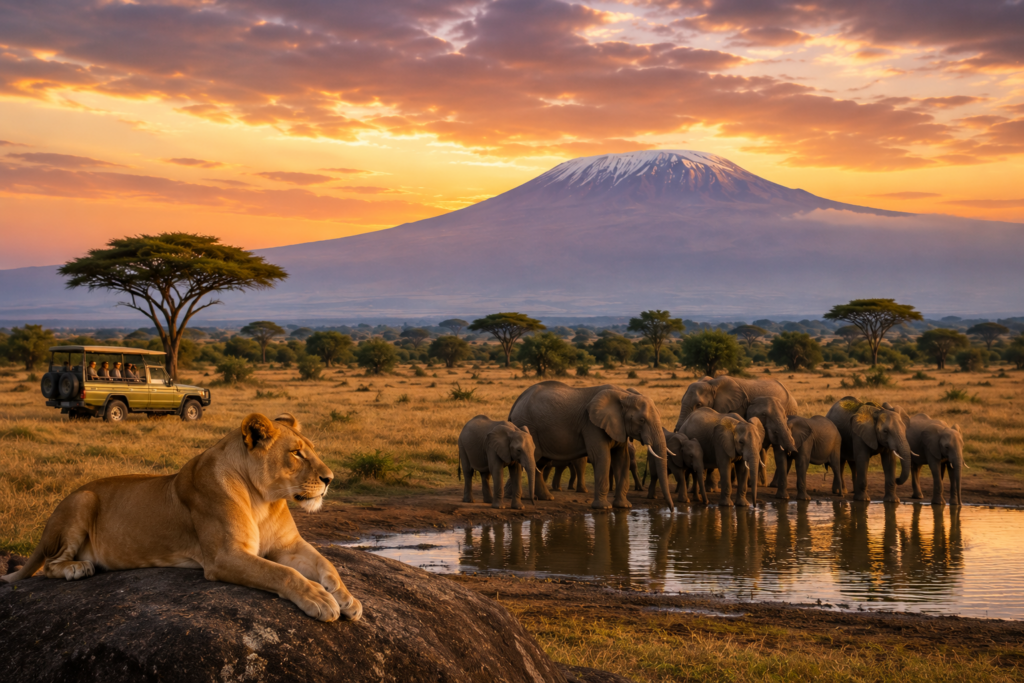
First, the wildlife density is extraordinary. The Serengeti alone supports over two million herbivores along with the predators that follow them. You will see lions lounging on rocky outcrops, leopards draped across tree branches, and cheetahs sprinting across open grasslands.
Second, the variety of landscapes is unmatched. You can experience the endless Serengeti plains, the volcanic Ngorongoro Crater, the baobab-dotted Tarangire, and the ground water forest of Lake Manyara all within one trip.
Third, Tanzania offers the Great Migration. This is the largest overland animal movement on earth. More than 1.5 million wildebeest, along with hundreds of thousands of zebras and gazelles, circle the Serengeti ecosystem year after year. Seeing a river crossing is one of the most dramatic wildlife spectacles anywhere on the planet.
Fourth, the safari infrastructure is excellent. You will find everything from budget camps to luxury safari lodges. Professional guides receive rigorous training. Domestic flights connect major parks. Tanzania truly caters to every travel style and budget.
Many first time safari travelers ask me whether Tanzania is better than Kenya for safari. The honest answer is that both are exceptional, but they offer different experiences. Tanzania tends to have fewer crowds outside peak season. It also offers the unique Ngorongoro Crater, which Kenya does not have. Kenya, on the other hand, has more diverse landscapes and often more budget options. The choice really depends on your preferences and how to plan a Tanzania safari that fits your dreams.
For this Tanzania safari travel guide, I will focus on what makes Tanzania extraordinary and how to make the most of your visit.
Best Tanzania Safari Destinations
Tanzania has over twenty national parks and several important conservation areas. You cannot see all of them in one trip, and you would not want to. A good Tanzania wildlife safari focuses on two to four key destinations.
Let me share the must visit Tanzania safari destinations for 2026.
Serengeti National Park
The Serengeti is the crown jewel of Tanzanian safaris. The name comes from the Maasai word meaning endless plains. That description is perfect. The park covers nearly 15,000 square kilometers of grasslands, woodlands, and riverine forests.
What makes the Serengeti special is the Great Migration. The wildebeest migration moves through different parts of the park throughout the year. From December to March, the herds gather on the southern plains for calving season. From April to June, they move west and north. From July to October, they cross the Mara River into Kenya’s Masai Mara before looping back south.
You do not need to visit during the migration to have an incredible Serengeti safari. The resident wildlife is abundant year round. Lions, leopards, elephants, giraffes, zebras, and countless bird species call the Serengeti home. The predator population is particularly healthy, making it one of the best places in Africa for big cat sightings.
My recommendation is to spend at least three to four nights in the Serengeti. This gives you enough time to explore different areas and increase your chances of witnessing dramatic wildlife encounters.
Ngorongoro Crater
The Ngorongoro Crater is often called the Garden of Eden, and for good reason. This massive volcanic caldera forms a natural enclosure for thousands of animals. The crater floor spans over 260 square kilometers and supports one of the densest wildlife populations in Africa.
What makes the Ngorongoro Crater unique is that you can see the Big Five in a single day. Lions, leopards, elephants, buffalo, and black rhinos all live within the crater walls. Rhino sightings here are more reliable than almost anywhere else in Tanzania.
The crater floor also features a large soda lake that attracts flamingos, hippo pools, and open grasslands where hyenas and jackals hunt. The scenery alone is worth the visit. The crater rim stands over 600 meters above the floor, offering breathtaking views.
Many Tanzania safari packages include a one night stay on the crater rim followed by a full day game drive on the crater floor. This is usually enough time to experience the highlights. However, I recommend extending to two nights if you want a more relaxed pace.
Tarangire National Park
Tarangire often gets overlooked, which is a shame. This park is a hidden gem that shines during the dry season. From June to October, the Tarangire River attracts huge concentrations of wildlife.
The park is famous for its elephant herds. You will see family groups of fifty or more elephants moving through the baobab dotted landscape. Tarangire also has excellent predator sightings, including lions that have learned to climb trees. The birdlife is spectacular, with over 550 species recorded.
Tarangire works perfectly as a one or two night stop on a northern circuit safari. It pairs well with Lake Manyara and Ngorongoro Crater.
Lake Manyara National Park
Lake Manyara is a small but rewarding park. The entrance gate is just a short drive from the town of Mweene, making it an easy addition to any itinerary.
The park features a ground water forest, open grasslands, and the alkaline Lake Manyara itself. Tree climbing lions are the main attraction here, though they are not guaranteed. You will also see large herds of buffalo, giraffes, zebras, and thousands of flamingos along the lake shore.
Lake Manyara works best as a half day or single night stop. It is an excellent introduction to Tanzanian wildlife, especially for families or travelers on shorter itineraries.
Southern Tanzania Parks
For travelers seeking remote wilderness experiences, southern Tanzania delivers in ways that the northern circuit cannot.
Ruaha National Park is Tanzania’s largest park. It is wild, rugged, and sees very few visitors compared to the Serengeti. Ruaha is famous for its large elephant population, wild dogs, and exceptional birdlife. The park requires more time and budget to visit, but the payoff is a truly exclusive safari experience.
Nyerere National Park, formerly part of the Selous Game Reserve, offers boat safaris alongside traditional game drives. You can explore the Rufiji River by boat, getting close to hippos and crocodiles. Walking safaris are also available here, giving you a different perspective on the bush.
These southern parks are best for returning safari travelers or those with at least ten days to spare. They require internal flights from Dar es Salaam or Zanzibar.
When Is the Best Time to Visit Tanzania
The best time for a Tanzania safari depends on what you want to see and experience. Tanzania has two rainy seasons and two dry seasons. Each offers different advantages.
Dry Season from June to October
This is peak safari season for good reason. The weather is consistently sunny with little to no rain. Wildlife congregates around water sources, making animals easier to spot. Vegetation is sparse, further improving visibility.
The Great Migration typically reaches the northern Serengeti between July and October. This is when you have the best chance of witnessing dramatic river crossings as the herds cross the Mara River.
The dry season is also the best time to visit Ngorongoro Crater because dusty conditions are less severe than in the late dry season.
There are some downsides to visiting during peak season. Prices for Tanzania safari packages are at their highest. The parks are more crowded, especially in the Serengeti and Ngorongoro Crater. Lodges and camps book out months in advance. You need to plan early.
Green Season from November to May
Most travelers avoid the rainy season, but I think that is a mistake. The green season offers unique advantages that savvy travelers love.
From November to December, the short rains arrive. The landscape turns lush and green. Migratory birds return from Europe and Asia, making this the best time for birdwatching. The parks are much quieter, and Tanzania safari prices drop by thirty to fifty percent.
From January to March, the calving season begins in the southern Serengeti. Around 8,000 wildebeest calves are born each day. Predators go crazy. This is one of the most action packed times to visit, yet most tourists are not there.
April and May bring the long rains. Some roads become muddy and difficult. Many lodges close for maintenance. I generally recommend avoiding these months unless you are on a very tight budget or a serious birder.
For most of my clients, I recommend either the dry season from June to October for classic safari conditions or the calving season from January to February for dramatic predator action with lower prices.
Understanding the Great Migration in Tanzania
The Great Migration is a year round event. The wildebeest travel in a clockwise loop around the Serengeti ecosystem. Here is a month by month breakdown of where the herds tend to be.
From December to March, the herds are on the southern Serengeti plains and around the Ndutu area. This is calving season. The action is concentrated and relatively easy to find.
From April to June, the herds move west toward the Grumeti River and then north. The Grumeti River crossings happen in May and June. These are smaller scale than the Mara crossings but still impressive.
From July to October, the herds gather in the northern Serengeti near the Mara River. This is when the famous river crossings occur. Crocodiles wait in the water. The herds hesitate, then surge across. It is pure chaos and completely unforgettable.
From November to December, the herds move back south as the short rains begin.
Understanding the Great Migration timing is essential for how to plan a Tanzania safari that meets your expectations. Ask your safari operator where the herds are likely to be during your travel dates.
Tanzania Safari Costs for 2026
How much does a Tanzania safari cost? This is the most common question I receive, and the answer varies widely.
Tanzania safari prices depend on several factors including the season, duration, accommodation level, number of parks visited, and whether you choose a private or group safari.
Let me break down realistic Tanzania safari cost expectations for 2026.
Budget Tanzania Safaris
Budget safaris typically cost between 150 and 250 US dollars per person per night. Accommodation is in basic camping or simple guesthouses. Transport is usually in safari vans rather than proper 4×4 vehicles. Meals are basic but filling.
These safaris work best for backpackers, solo travelers, or groups on extremely tight budgets. You will still see amazing wildlife, but you should expect fewer comforts and more shared facilities.
Mid Range Tanzania Safaris
Mid range safaris cost between 300 and 600 US dollars per person per night. This is the sweet spot for most travelers from the United States, Canada, Europe, and Australia.
Accommodation is in comfortable tented camps or permanent lodges with private bathrooms, hot showers, and often swimming pools. Transport is in proper 4×4 Land Cruisers with pop up roofs for excellent viewing. Meals are buffets or plated dinners with good variety.
Most Tanzania safari packages on the northern circuit fall into this price range. You get excellent value without breaking the bank.
Luxury Tanzania Safaris
Luxury safaris start around 800 US dollars per person per night and can exceed 2,000 dollars for high end camps.
Accommodation is in exclusive lodges or tented camps with private decks, outdoor showers, fine dining, and exceptional service. Many luxury safaris include fly in options, private vehicles, and personal guides. Extras like spa treatments, bush dinners, and hot air balloon safaris are often included.
Luxury Tanzania safari holidays are perfect for honeymoons, milestone celebrations, or travelers who value comfort and exclusivity above all else.
Realistic Budget Example
A seven day Tanzania safari visiting Tarangire, Lake Manyara, Ngorongoro Crater, and the Serengeti in mid range accommodation will cost approximately 2,800 to 4,000 US dollars per person. This includes park fees, transport, accommodation, most meals, and a professional guide. International flights are not included.
Compare that to a week long trip to a European capital or a Caribbean resort. A Tanzania wildlife safari offers incredible value when you consider the once in a lifetime experiences you will gain.
How Many Days Do You Need for a Tanzania Safari
How many days for a Tanzania safari is enough? The answer depends on your goals, budget, and available time.
Three to Four Day Tanzania Safari
Three to four days is very short for a Tanzania safari. You can visit one or two parks, but you will be rushed. You might miss key animals and you will certainly miss the deeper experience that longer stays offer.
This duration works only for travelers adding a short safari onto a beach holiday in Zanzibar or a business trip to Dar es Salaam.
Five Day Tanzania Safari
A five day Tanzania safari is a solid introduction. You can comfortably visit Lake Manyara, Ngorongoro Crater, and Tarangire National Park. You will likely see the Big Five and experience excellent wildlife viewing.
I recommend this duration for families with young children or travelers with limited vacation time.
Seven Day Tanzania Safari
Seven days is the sweet spot for most travelers. You can visit four parks including the Serengeti. This gives you time for three nights in the Serengeti, which is enough to explore different areas and significantly increases your chances of witnessing dramatic wildlife encounters.
A typical seven day Tanzania safari itinerary includes Tarangire, Lake Manyara, Ngorongoro Crater, and the Serengeti. This is the classic northern circuit and it delivers exceptional value.
Ten Day or Longer Tanzania Safari
Ten days or more allows you to explore deeper. You can add a visit to Lake Natron for walking with Maasai guides. You can extend your time in the Serengeti to cover both the central and northern regions. You can even add a few days in Zanzibar to recover on the beach after your safari.
Longer safaris are also necessary if you want to visit southern parks like Ruaha or Nyerere National Park. These require internal flights and more travel time.
For most first time safari travelers, I recommend a seven day Tanzania safari. It offers the best balance of value, experience, and relaxation.
Tanzania Safari Packing List
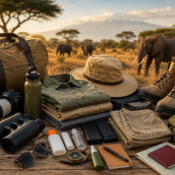
Knowing what to pack can make or break your safari experience. Here is my practical Tanzania safari packing list based on years of trial and error.
Clothing should be neutral colors like olive, tan, brown, or khaki. Bright colors attract unwanted attention from insects and can disturb wildlife. Avoid blue and black, which attract tsetse flies.
Pack long sleeved shirts and long pants. These protect against morning cold, evening mosquitoes, and the intense sun. A fleece or lightweight jacket is essential for early morning game drives when temperatures can be near freezing in an open vehicle.
Shorts and short sleeved shirts work well for midday when the sun is high. A swimsuit is useful as many lodges and camps have pools.
For footwear, comfortable closed toe shoes or hiking boots are best. You will not be doing serious hiking, but you will be climbing in and out of vehicles on dusty ground.
Gear matters as much as clothing. Binoculars are absolutely essential. A good pair of binoculars will enhance your safari more than an expensive camera. For cameras, bring a zoom lens of at least 300 millimeters. Four hundred millimeters is even better.
A power bank is useful even though most safari vehicles have charging ports. A headlamp or small flashlight helps at night when walking between tents or rooms.
Health and document essentials include your passport with at least six months validity, a printed copy of your eVisa, yellow fever vaccination certificate if required, malaria prophylaxis prescribed by your doctor, high SPF sunscreen, lip balm, and insect repellent with DEET.
Leave jeans at home because they are too stiff and hot for safari. Leave high heels, formal wear, and drones which are illegal in national parks.
Tanzania Visa and Entry Requirements
Do not let paperwork ruin your trip. Understanding Tanzania entry requirements before you go saves stress and money.
Most nationalities need a visa to enter Tanzania. You have two options. You can apply for an eVisa online before travel, or you can get a visa on arrival at major airports and border crossings.
The eVisa costs about 50 US dollars for most nationalities. Processing takes five to ten working days, so apply early. You will receive a PDF via email. Print this and keep it with your passport.
The visa on arrival costs 50 US dollars for most nationalities and 100 US dollars for US passport holders. You must pay in cash, preferably US dollars printed after 2020. Cards are not accepted.
Your passport must be valid for at least six months from your arrival date and have at least two blank pages for entry stamps.
Yellow fever vaccination is required if you are traveling from a country with yellow fever risk, including transiting through such a country. The certificate must be presented at immigration. For travelers coming directly from Europe, North America, or Australia, yellow fever is not required but is still recommended by some health authorities.
Malaria prophylaxis is strongly recommended. Consult your travel doctor at least six weeks before departure. Other recommended vaccinations include hepatitis A, typhoid, and tetanus.
Travel insurance is mandatory for most safari operators, including Probe Safaris. Ensure your policy covers medical evacuation, as this can be extremely expensive without insurance.
Tanzania Safari Travel Tips from a Local Guide
Let me share some insider knowledge that will make your Tanzania safari smoother and more enjoyable.
For currency, the Tanzanian shilling is the local currency, but US dollars are widely accepted in tourist areas. Carry US dollars printed after 2020 in small denominations for tips and incidental purchases. Larger bills often get better exchange rates. ATMs are available in Arusha, Moshi, and other towns, but not inside national parks.
Tipping is customary in Tanzania. Safari guides typically receive 15 to 25 US dollars per day per group. Camp and lodge staff share tips of 10 to 20 US dollars per day per group. These amounts are guidelines. Tip what feels right based on the service you received.
Safety in Tanzania is generally excellent for tourists. The safari areas are far from any security concerns. Violent crime targeting tourists is rare. Use common sense. Do not walk alone at night in cities. Keep valuables hidden. Follow your guide’s instructions inside the parks.
Connectivity is improving but remains limited in remote areas. Most lodges and camps offer WiFi, but speeds are slow. Purchase a local SIM card from Vodacom or Airtel at the airport if you need reliable data. Safaricom also works near the Kenyan border.
Photography tips will help you capture incredible memories. Shoot in shutter priority mode with a speed of at least 1/1000th of a second for moving animals. The golden hours just after sunrise and just before sunset offer the best light. Do not bring a tripod because it is useless in a moving vehicle. Practice using your camera before you arrive so you are not fumbling with settings while a leopard walks past.
Wildlife etiquette matters. Never get out of the vehicle unless your guide says it is safe. Do not feed any animals. Keep noise to a minimum to avoid disturbing wildlife. Give predators and other animals plenty of space. Follow your guide’s instructions at all times.
Why Book Your Tanzania Safari with Probe Safaris
You have many choices when selecting a safari operator. Let me tell you why travelers choose Probe Safaris for their Tanzania safari tours.
We are local. Our office is in Arusha, the gateway to the northern parks. We drive these roads every week. We know which rangers are friendly, which camps have the best food, and where the lions like to sleep.
We listen to you. We do not sell fixed packages. We ask about your travel dates, group size, interests, and budget. Then we build a tailor made Tanzania safari itinerary that fits you perfectly.
We prioritize safety. Our 4×4 Land Cruisers are regularly serviced and equipped with safety features. Our guides are certified professionals who undergo continuous training.
We offer real value. By booking directly with a local operator, you skip international middlemen and their markups. You get luxury safari experiences at honest prices.
We care about conservation and community. A portion of every safari supports local schools and wildlife protection efforts.
Ready to plan your Tanzania safari holiday? Contact Probe Safaris today. Share your dream travel dates, how many people are in your group, and what you hope to see. We will send you a custom itinerary within 24 hours.
Frequently Asked Questions About Tanzania Safaris
What is the best safari in Tanzania
The best safari in Tanzania combines the Serengeti, Ngorongoro Crater, and Tarangire or Lake Manyara. A seven day itinerary covering these parks gives you the classic northern circuit experience with excellent wildlife viewing and diverse landscapes.
How much does a Tanzania safari cost
A mid range seven day Tanzania safari costs between 2,800 and 4,000 US dollars per person. This includes park fees, transport, accommodation, meals, and a professional guide. International flights are extra.
What is the best month to visit Tanzania
September is widely considered the best month. The weather is dry, the Great Migration is in the northern Serengeti with river crossing opportunities, and there are fewer crowds than July and August.
How many days do you need for a Tanzania safari
Seven days is the recommended duration for most travelers. This gives you enough time to visit four parks including the Serengeti without rushing. You will see the Big Five and experience the highlights of the northern circuit.
Is Tanzania better than Kenya for safari
Tanzania offers larger, less crowded parks, the unique Ngorongoro Crater, and excellent year round wildlife viewing. Kenya offers more diverse landscapes and often lower prices. Both are exceptional. The best choice depends on your priorities. Many travelers eventually visit both.
What animals can you see in Tanzania
You can see the Big Five including lions, leopards, elephants, rhinos, and buffalo. You will also see cheetahs, giraffes, zebras, hippos, crocodiles, hyenas, wild dogs, and over a thousand bird species.
When does the Great Migration happen
The Great Migration is a year round event. The herds calve in the southern Serengeti from January to March, move west and north from April to July, cross the Mara River from July to October, and move back south from November to December.
Do I need a visa for Tanzania
Yes. Most nationalities need a visa. You can apply for an eVisa online before travel or get a visa on arrival at major airports. The cost is 50 US dollars for most passport holders and 100 US dollars for US citizens.
Is Tanzania safe for tourists
Yes. The safari circuit is very safe for tourists. The areas you will visit are far from any security concerns. Use common sense in cities and follow your guide’s instructions in the parks.
What should I pack for a Tanzania safari
Pack neutral colored clothing, long sleeves and pants, a fleece or jacket for cold mornings, comfortable closed toe shoes, binoculars, a camera with a zoom lens, sunscreen, insect repellent, and your passport and visa.
Your Tanzania Safari Awaits
You made it through this complete Tanzania safari guide. That tells me you are serious about planning this trip.
You now know the best Tanzania safari destinations including the Serengeti, Ngorongoro Crater, Tarangire, and Lake Manyara. You understand the best time to visit, from the dry season peak to the calving season hidden gem. You have a realistic budget of 2,800 to 4,000 dollars for a seven day mid range safari. You know what to pack and what documents you need.
So what is next
Do not spend weeks scrolling through random blogs and YouTube videos. You have the information. Now you need a partner on the ground.
Contact Probe Safaris today. Tell us your travel dates, your group size, and your dream budget. We will send you a custom Tanzania safari itinerary within 24 hours.
No pressure. No spam. Just honest advice from people who love this country and this continent.
Your Tanzania safari adventure is waiting. Let us make it happen together.
Contact Probe Safaris
Email info@probeafricasafaris.com or probeafricasafarisltd@gmail.com
Call or WhatsApp at 254 741 017 793 or 254 706 265 710
Visit our office at Venus Complex, 1st Floor Room 4107, Northern Bypass, Nairobi, Kenya
Visit our contact page at probeafricasafaris.com/contact
Start planning your Tanzania safari now and get a free quote.